Hook
The dead-statue problem in AI 3D is old news: models spit out a beautiful mesh you can’t move. Bake3D, which went live on September 29, 2026, takes the whole chain — image in, textured mesh, a working skeleton with skin weights, and a described motion — and puts it in one browser tab. And its party trick isn’t the humanoids. It’s the foxes, dragons and forklifts.
The Story
We’ve covered the research side of this hard problem plenty. AniGen rigged a character from one photo. SkinTokens turned rigging into a language model. KaiNinja trained on parts an agent authored so objects came apart. All brilliant, all papers. Bake3D is the boring, important other half: a shipping product a solo creator can pay ten dollars to use tonight.
The flow is four steps, and Bake3D lets you inspect each one before you spend the next credit. You upload a drawing, a render or a photo — one to four views of the same subject. It builds a textured mesh. It fits a skeleton and paints skin weights. Then you type a sentence to describe a movement, and it animates. No rig-by-hand, no weight-painting marathon, no bouncing between four apps.
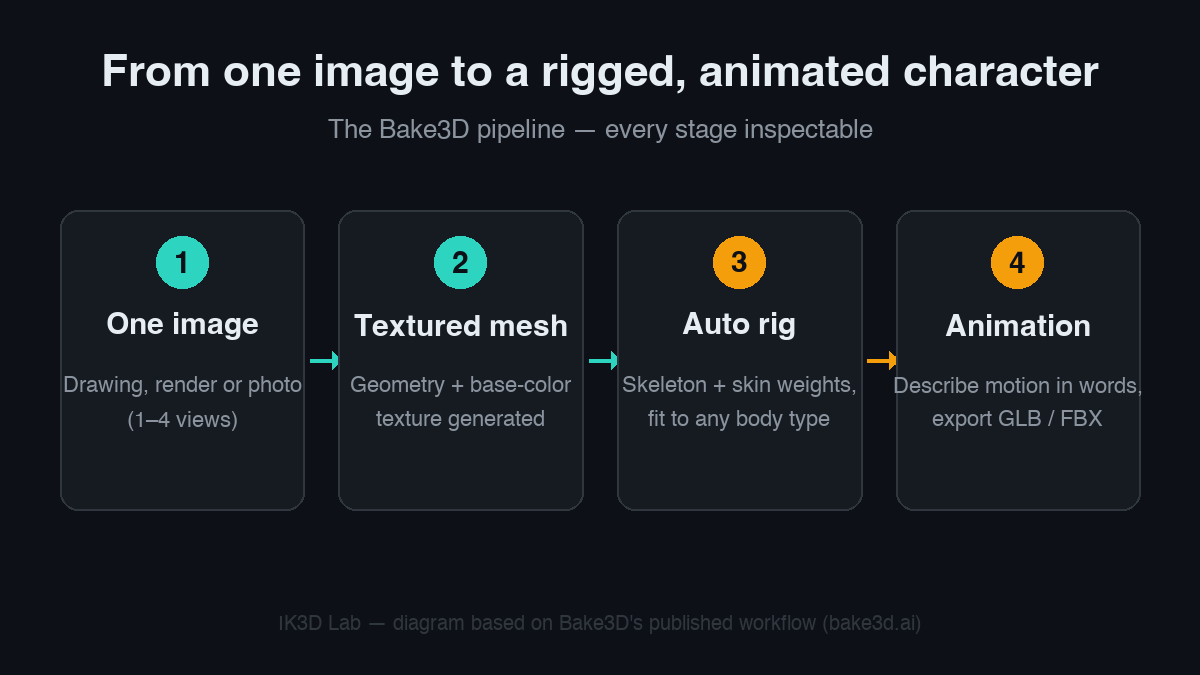
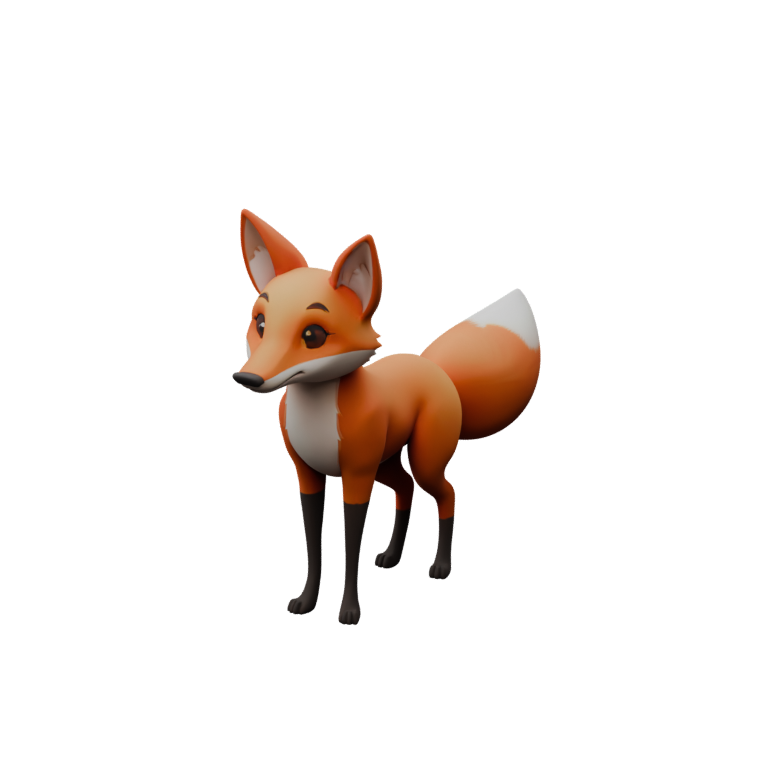
The real bet is anatomy. Most auto-riggers assume a two-arm, two-leg human template and fall apart the moment you hand them a bird or a snake. Bake3D is built to solve the skeleton for the weird stuff: winged creatures, aquatic life, multi-limbed beings, serpentine forms, vehicles and mechanical assemblies. That’s the fox above — a quadruped with a tail, not a T-posing person. For anyone making a game bestiary or a cast of non-human characters, that’s the whole ballgame.
Why You Should Care
Because it exports into your real pipeline. Bake3D writes GLB (mesh, textures, skeleton and skin weights in one file) and FBX 7.4 with an embedded base-color texture, and it names Blender, Unity, Unreal Engine and Godot as targets. This isn’t a walled garden that traps your character in a web viewer. You get a file, and it drops into the tools you already use.
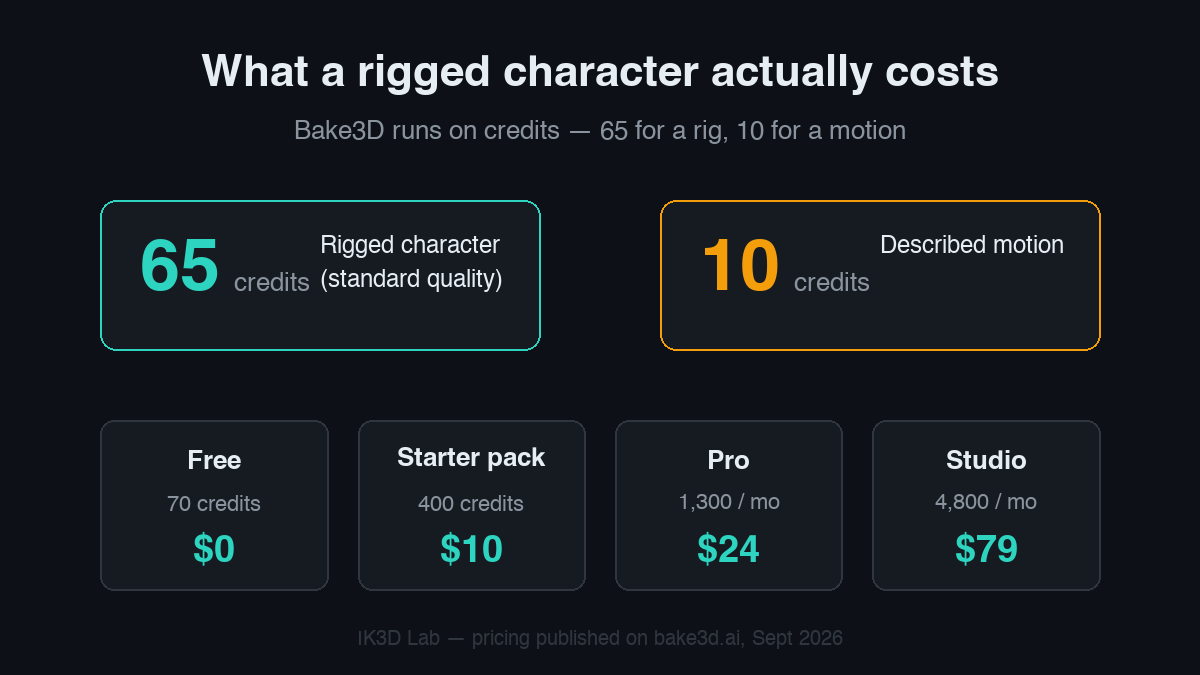
The pricing is refreshingly legible, too. It runs on credits, not a fog of tiers. A rigged character at standard quality is 65 credits. A described motion is 10. The free plan hands you 70 credits to actually kick the tires — enough for one full rigged character — and a $10 starter pack buys 400.
Try It / Follow Them
- Start free: bake3d.ai — 70 credits, no purchase, enough for one rigged character.
- Best first test: feed it something non-humanoid — a creature or a vehicle — and see if the skeleton holds up. That’s where it either earns its keep or doesn’t.
- Export target: pull the GLB into Blender or Godot and check the weights on the deforming joints before you build a whole cast on it.
IK3D Lab Take
The research has been screaming for two years that one-image-to-rigged-character is possible. Bake3D is one of the first products to package it cleanly, price it like a human, and — crucially — not assume everything you make has two arms and two legs. We haven’t stress-tested the rig quality ourselves yet, and that’s the honest question: auto-rigs are easy to demo and hard to ship, and a skeleton that looks right can still deform ugly at the elbows. The 70 free credits exist precisely so you can answer that before you trust it. Point it at your hardest creature, open the weights in Blender, and judge the joints. If they hold, this is a genuine shortcut. If they don’t, you learned it for free.
Seen a tool the Lab should pull apart? Send it our way.