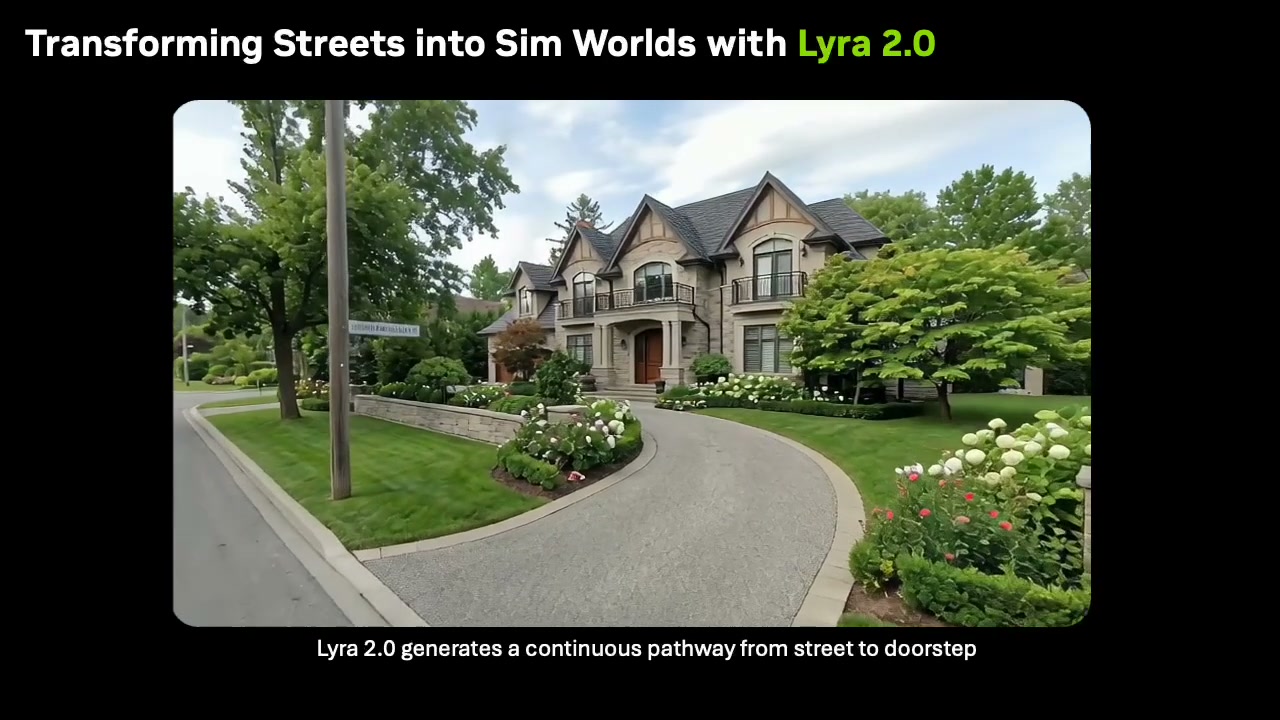
Give NVIDIA’s new model a single photo and a whisper of a prompt, and it doesn’t just paint a prettier picture — it walks you down the street, turns the corner, and hands you the 3D world it just invented, splats and meshes ready to drop into a physics engine. That’s Lyra 2.0, and it quietly cracked the one thing every world model kept fumbling: staying consistent long enough to actually explore.
The Story
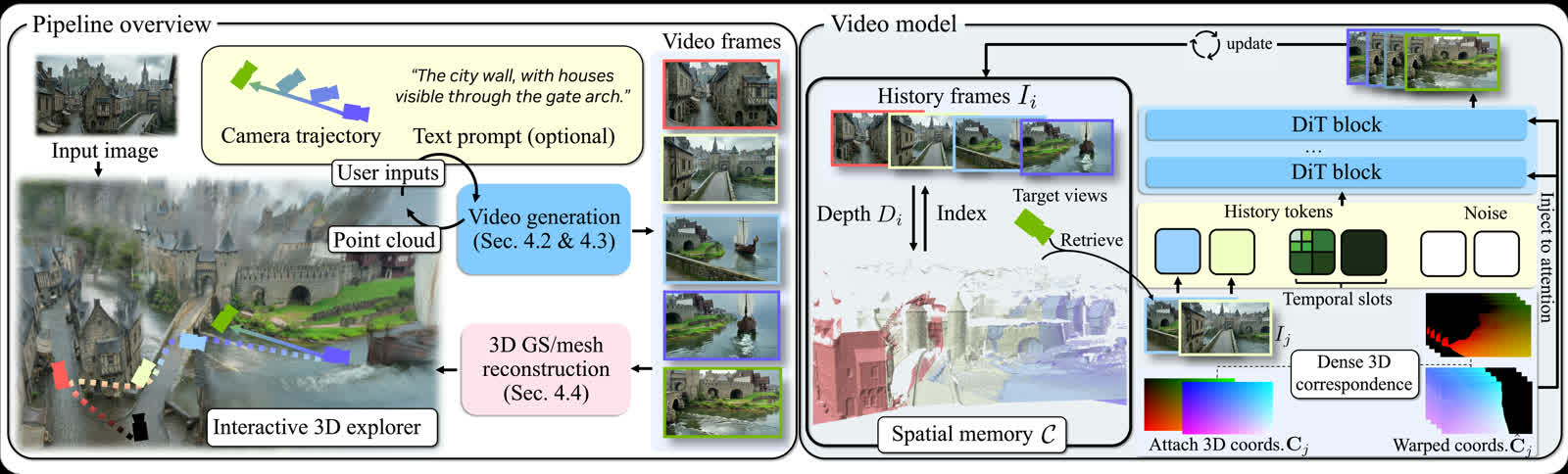
Lyra comes out of NVIDIA’s Toronto Spatial Intelligence Lab — 14 researchers led by Tianchang Shen and Xuanchi Ren. The idea behind the first version was already clever: instead of training a 3D model from scratch, they distill 3D knowledge out of a video diffusion model. A frozen video generator dreams a camera move through a scene; a decoder learns to turn that dream into explicit 3D Gaussian Splats. No camera rig, no multi-view capture, no COLMAP. One image in, a real 3D scene out.
The catch with every model like this has always been distance. Ask it to walk more than a few meters and the world starts to rot — geometry it already showed you comes back wrong, and small errors pile up into total drift. Lyra 2.0 is the version that fixes exactly that, and it’s the reason this one matters.
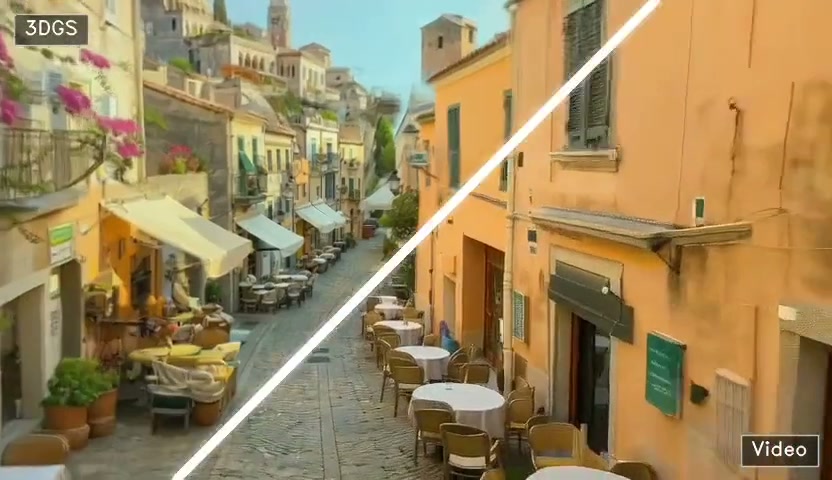
Two tricks do the heavy lifting. The first attacks what the team calls spatial forgetting: Lyra 2.0 keeps a per-frame geometry memory, so when the camera revisits a spot it retrieves what was actually there instead of hallucinating fresh. The second attacks temporal drifting with self-augmented training — they deliberately feed the model its own degraded, drifted outputs during training and teach it to correct course. In plain terms: they let it make the mistake on purpose, over and over, until it learns to climb back out. The payoff is long, 3D-consistent walkthroughs instead of three good seconds and then mush.
Why You Should Care
The output isn’t a locked video clip. Lyra 2.0 hands you point clouds, 3D Gaussian Splats, and meshes — and the meshes export straight into physics engines. That last word is the whole point. NVIDIA showed a delivery robot navigating a scene Lyra generated inside Isaac Sim. A world model that produces simulatable geometry isn’t a toy for pretty flythroughs; it’s a training ground for robots and agents, and a set-dressing machine for anyone building game or arch-viz environments.
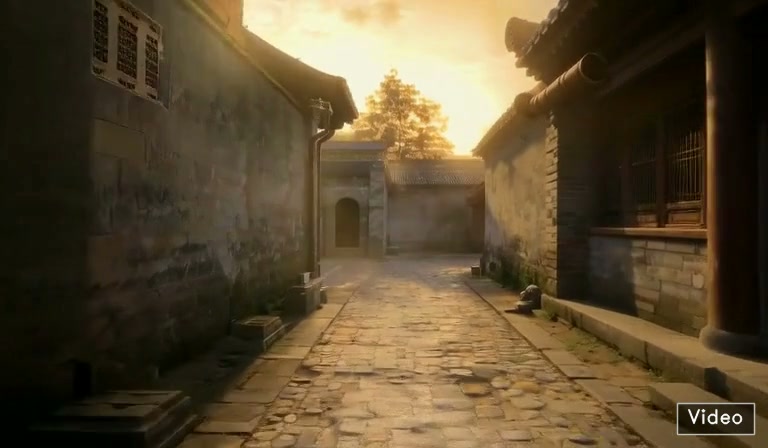
For a 3D artist, the honest read is this: you’re not getting hero-asset topology out of a world model, and you shouldn’t expect to. What you’re getting is a fast, explorable backdrop from one reference image — a whole street, a garden, an interior — that you can capture as splats, walk through, and use as a base to build on. That’s a genuinely new starting point for a scene.
Try It / Follow Them
- Project page: nv-tlabs.github.io/Project-Lyra — teaser videos, the Isaac Sim robot demo, and the GUI walkthroughs.
- Code: github.com/nv-tlabs/lyra — Apache 2.0 source, with GUI and training code for 2.0.
- Weights: huggingface.co/nvidia/Lyra-2.0 — plus a 4-step DMD distillation LoRA for faster generation.
Paper, weights and code landed together, with the GUI and training code following in mid-2026. It’s an NVIDIA research release, so plan for a serious GPU — but the whole thing is open, Apache-licensed, and runnable.
IK3D Lab Take
We’ve covered a wall of world models this year, and most of them chase the same demo: a pretty camera move that falls apart the moment you ask it to remember. Lyra 2.0 is interesting precisely because it went after the boring, hard problem — consistency over distance — and did it with a trick we love: teaching the model to fix its own mistakes by showing it its own failures. The fact that the output drops into a physics engine, not just a video player, is what pulls this out of “neat” and into “useful.” It’s not going to retopo your hero prop. But as a way to conjure a whole explorable place from one photo and start building? That’s the good kind of cheating.