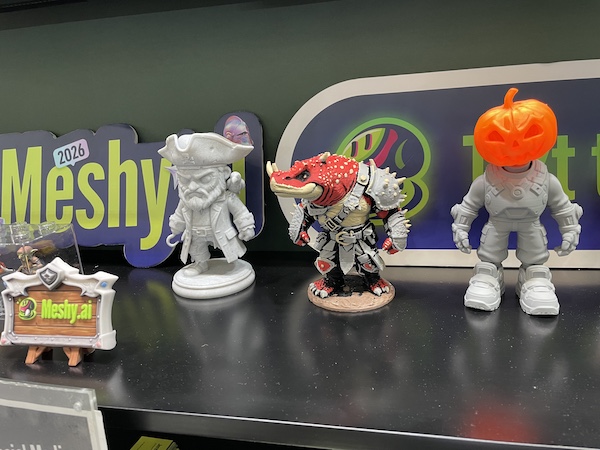
You type a prompt. Thirty seconds later you have a 3D model. Five minutes after that, it’s on its way to your mailbox — professionally 3D-printed in SLA resin or SLS nylon. No slicer. No CAD software. No 3D printer required. Meshy just closed the last gap between imagination and physical object.
The Story
On April 14, 2026, at the RAPID + TCT conference in Boston — the Super Bowl of additive manufacturing — Meshy.ai stepped into the spotlight with something the industry had been waiting years for: a single platform that takes you from a text prompt all the way to a professionally manufactured physical part, delivered to your door.
The announcement: a deep integration between Meshy’s generative AI 3D platform and Formlabs’ Form Now on-demand print service. Form Now is Formlabs’ professional manufacturing arm — the people who make the best SLA and SLS desktop printers in the world. The integration went live on April 8 for all Meshy users.
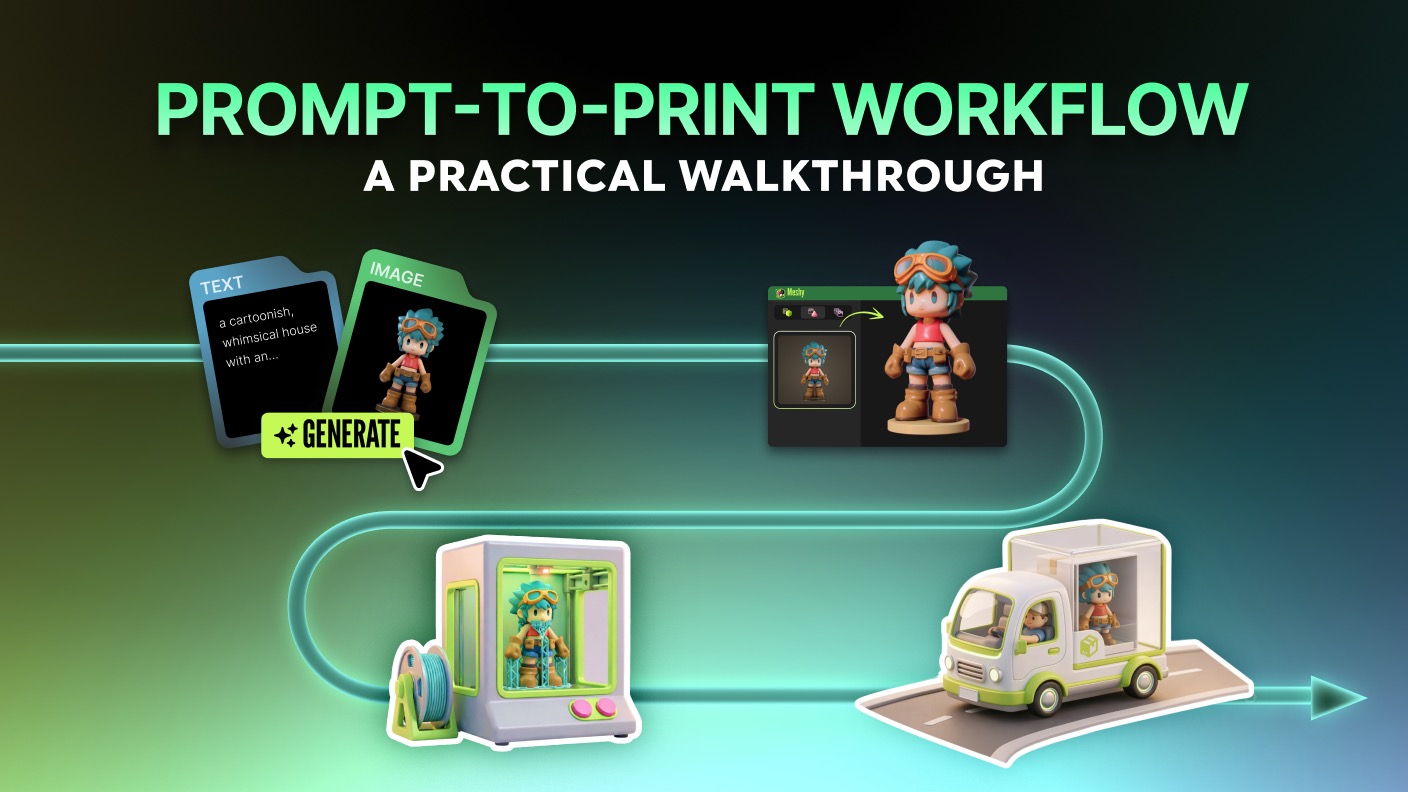
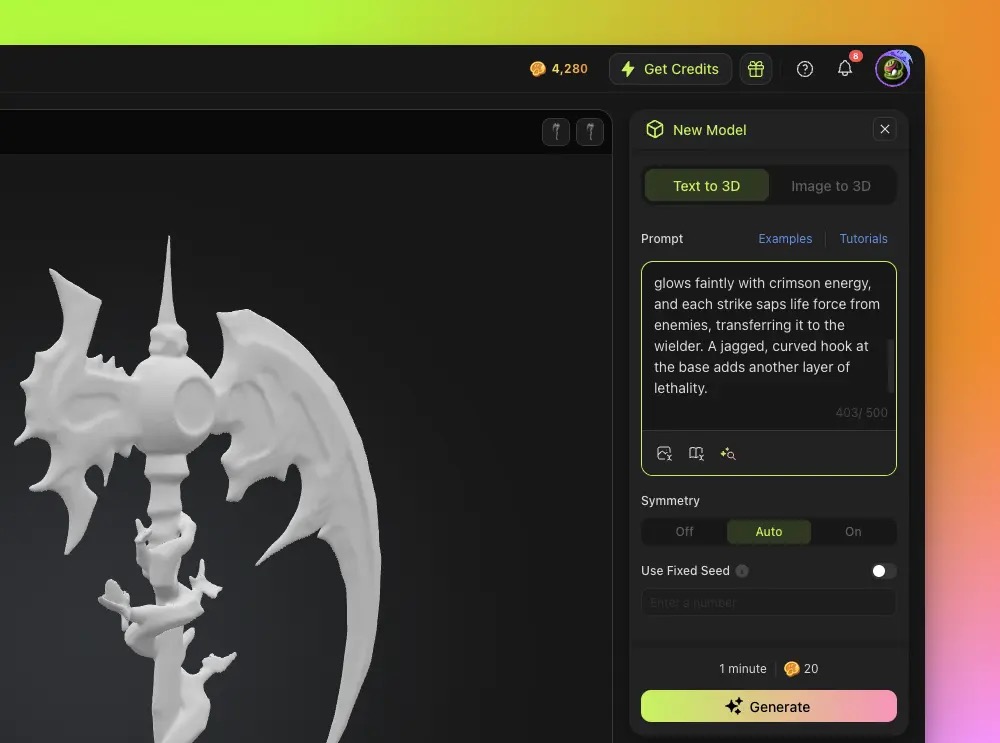
Here’s the flow: you enter a text prompt (or upload a photo) into Meshy. In 30–60 seconds, you have a textured, detailed 3D model. Meshy then automatically runs mesh repair, wall thickness checks, and geometry optimization — achieving a 97% slicer pass rate on character and figurine models. Then you click “Print with Form Now,” choose your material and color, and within 48 hours, Formlabs ships you the finished part from their production facility in Billerica, Massachusetts. Total time from prompt to order placed: under five minutes. No file downloads. No separate account setup. No topology cleanup.
This is the first time a generative AI platform has legitimately closed the full loop between creation and physical manufacturing. Not a workaround — a genuine end-to-end pipeline.
“By partnering with Form Now, we are completing the generative AI loop. Our users can already create stunning 3D assets with text in seconds; now, they can hold those assets in their hands with the same level of ease.”
— Ethan Hu, Founder & CEO, Meshy.ai
Behind the Platform
Meshy isn’t a startup playing around. They’ve crossed 10 million users and have powered over 100 million generated 3D models. Founder Ethan Hu is an MIT-trained PhD and the creator of the Taichi GPU programming language — so when he says the AI is “specifically trained to output watertight, manifold mesh geometry,” that’s not marketing speak. It means the models come out print-ready, not as broken meshes that need 45 minutes of Blender surgery.
Alongside the Formlabs announcement, Meshy shipped Workspace 3.0 — a ground-up redesign with four dedicated task spaces (Image, Model, Print, Animate), a unified asset library so your 2D references and 3D models live in the same place, and a new creation bar with prompt presets for faster iteration. For enterprise teams, there’s now production-grade API access with the stability needed for serious pipelines.
And the hardware ecosystem is growing fast. xTool and Snapmaker are building custom creative tools on Meshy’s API. Flashforge is working with Meshy on full-color model compatibility ahead of their consumer full-color 3D printer launch in Q2 2026. Full-color printing — meaning your AI-generated model prints in its actual textured colors, not monochrome — is coming this year.
Why You Should Care
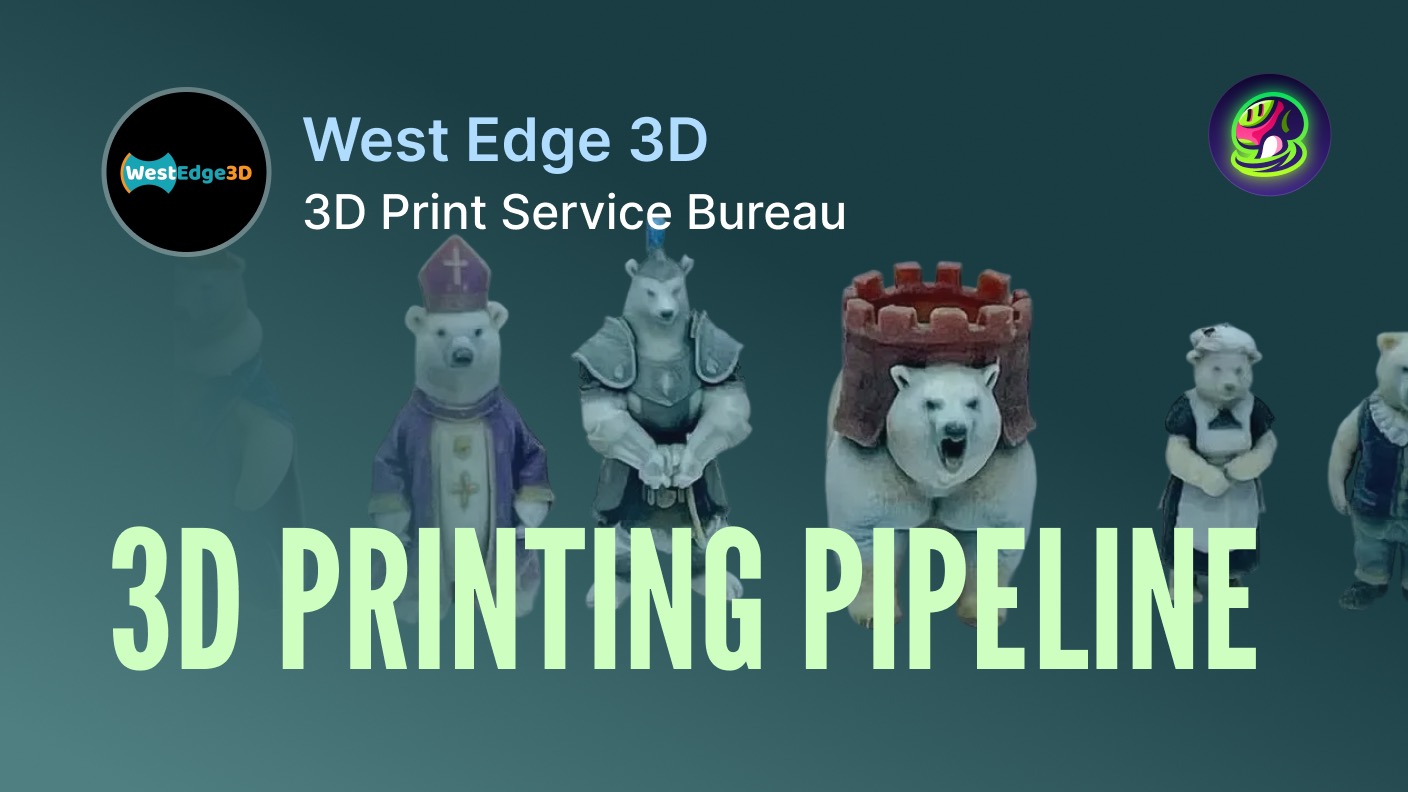
The conventional pipeline for getting a custom 3D-printed object made was: design in CAD (or hire someone who can) → export STL → fix mesh → configure slicer → find a print service → upload file → wait. That’s 2–4 hours of technical work before you even place an order, and you need software expertise at every step.
Meshy × Formlabs collapses that to: describe what you want → click print. This isn’t just about convenience. It fundamentally changes who can make physical objects. A game designer who’s never touched a slicer can now prototype a character figurine. An architect can hold a miniature model of a design concept in their hands before committing to a render. A maker can turn a rough sketch photo into a keychain in the time it takes to watch a YouTube video.
For the IK3D audience specifically: think rapid physical prototyping for 3D prints, client-ready miniatures, game assets that exist in the real world, architectural concept models, collectibles. The bottleneck just moved from “can I make this?” to “what should I make?”
Try It
- Meshy.ai — meshy.ai — free tier available, Form Now integration active for all users
- Formlabs Form Now — on-demand SLA/SLS printing, ships in 48h — accessible directly through Meshy’s “Print” tab
- Workspace 3.0 — already live in your Meshy account, no update needed
- Hardware partners for DIY printers: xTool, Snapmaker, Flashforge (native Meshy integration)
- Follow the RAPID+TCT 2026 coverage at Digital Engineering 247
IK3D Lab Take
The “digital-to-physical” gap has always been the thing that kept AI 3D generation feeling like a screen toy. You’d generate a gorgeous model, admire it in the viewport, maybe export it… and then realize you needed to spend another afternoon cleaning it up before it could be printed. Meshy × Formlabs just killed that friction.
What’s interesting here isn’t just the Formlabs partnership — it’s that Meshy is positioning itself as the content layer for the entire 3D hardware ecosystem. xTool, Snapmaker, Flashforge, and apparently more hardware partners coming — they’re all building on Meshy’s API. That’s a smart play: own the generation side, and let the hardware companies handle the physical output. If the full-color printing pipeline lands on schedule in Q2, things get even more interesting.
This is the tool your non-technical collaborators will use to prototype ideas before handing them to you for the real build. And honestly? For rapid ideation, even experienced 3D artists are going to want this in their workflow.