Hook
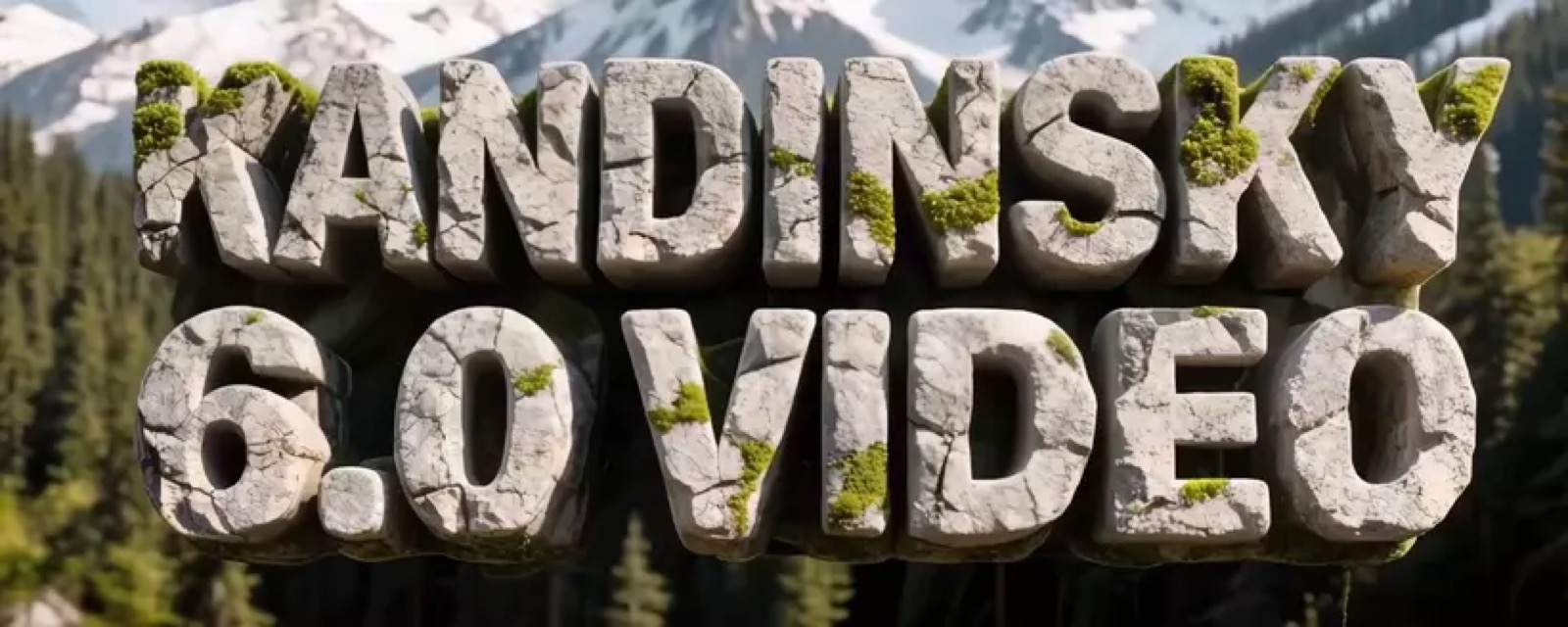
Most open video models hand you a silent clip and leave the sound to you. Kandinsky 6.0 Video does both at once: it generates the picture and 44 kHz audio in the same pass, with lip-sync, under an MIT license. You can run the small version on a single consumer GPU.
The Story
On 6 October 2026, the Kandinsky Lab team open-sourced Kandinsky 6.0 Video. It ships in two sizes: a 3B-parameter Lite and a 29B-parameter Pro. Both make 5-second clips with synchronized 44 kHz audio, including lip-sync, and both cover two modes: text-to-audio-video and image-to-audio-video. A separate super-resolution model raises the output to Full HD (1920×1080).
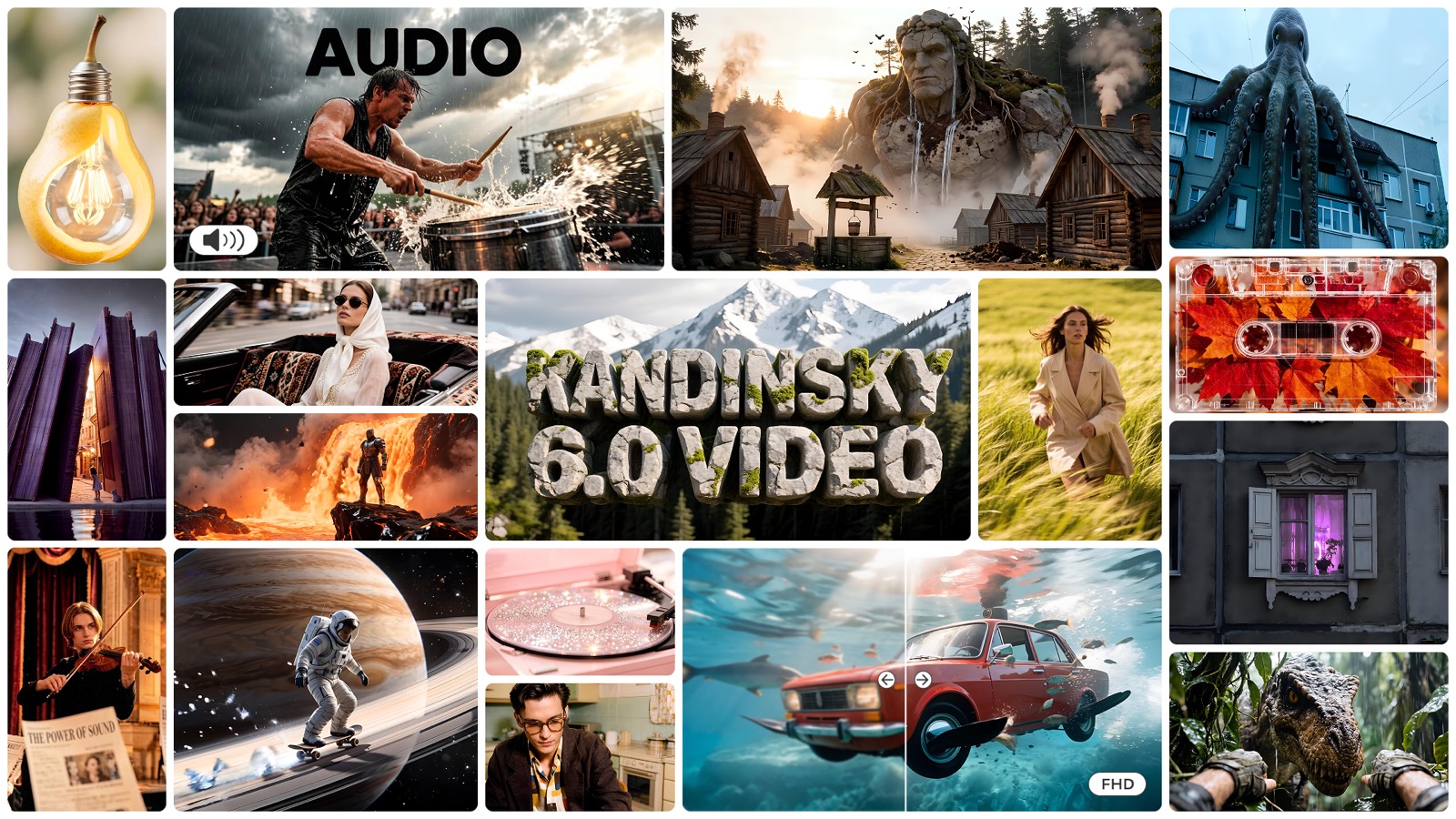
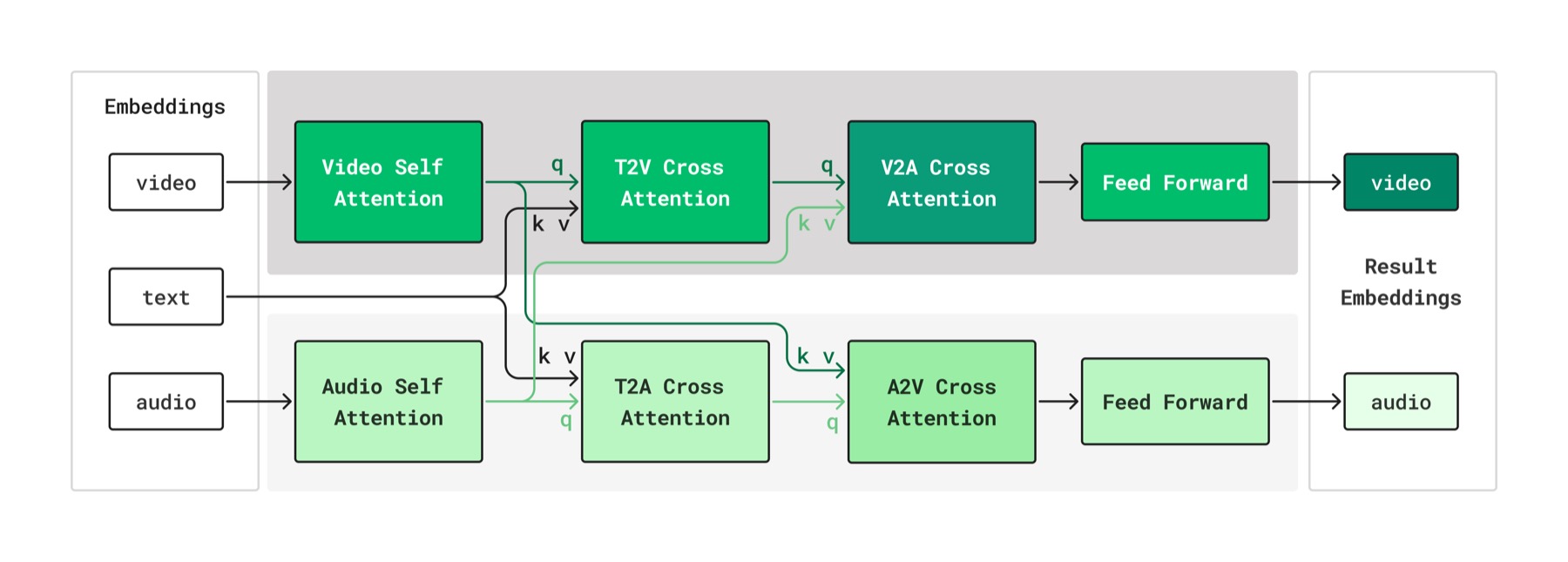
The trick is the architecture. The paper calls it a dual-stream CrossDiT. A pretrained video stream is linked to a freshly trained audio stream through bidirectional cross-attention. That cross-talk is what keeps the mouth and the voice aligned, instead of stitching a soundtrack on afterward.
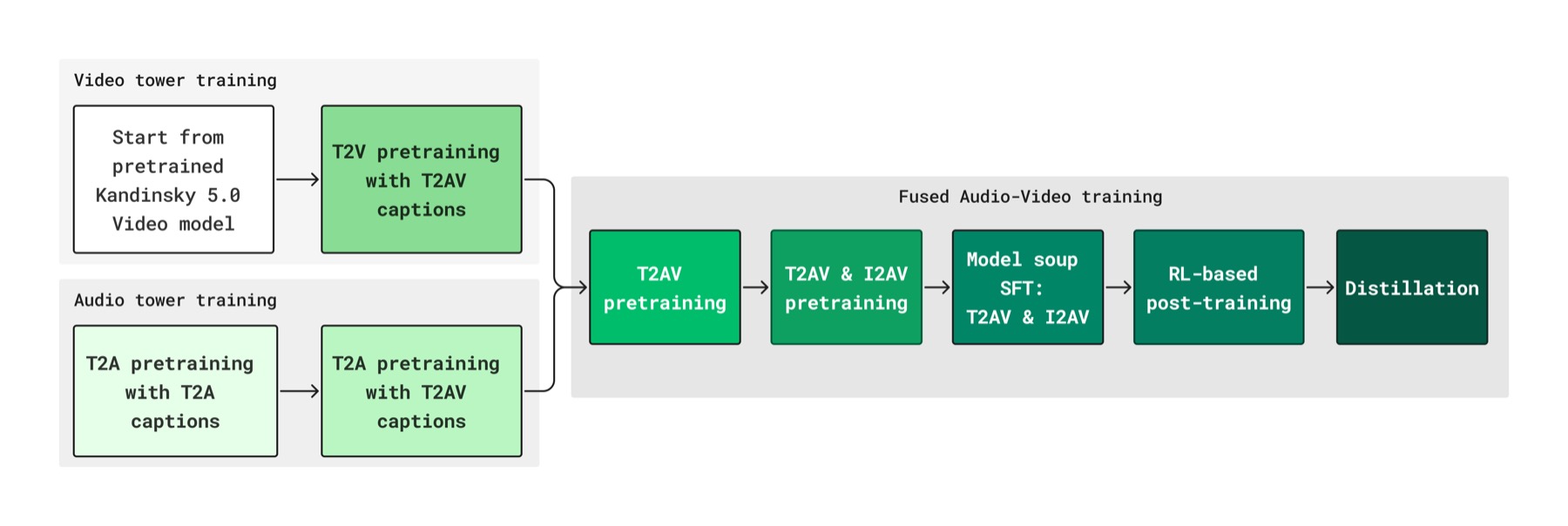
Training runs in stages: audio pretraining, joint audio-video training, supervised fine-tuning, reinforcement-learning post-training, then distillation. The team reports that RL post-training cut Pro’s speech word error rate by 47%, and that a 10-step distilled version exists for speed. The authors say Pro clearly beats their own Kandinsky 5.0 Video Pro and is competitive with leading audio-video models, with a stated edge on speech quality.
Why You Should Care
Sound is the part AI video usually skips. A talking character with the wrong mouth movement breaks the shot instantly. A model that generates matched audio and lip-sync in one pass removes a whole editing step for anyone doing character work, pre-viz, or short-form content.
The license matters just as much. MIT means you can use it commercially, modify it, and build it into your own pipeline without a separate agreement. Code, checkpoints, and a Diffusers integration all ship under that license. There is day-one support in ComfyUI, FastVideo, SGLang and vLLM-Omni, plus a published ComfyUI node.
And the Lite model is genuinely reachable. The official timing table lists 5-second runs across cards from the RTX 4090 up to the H100. Be honest about the cost, though: these are not instant. On the non-distilled model, the README’s own numbers put Pro at Full HD between roughly 402 seconds on an H100 and 3530 seconds on an RTX 5060 Ti. The 10-step distilled build is the one to reach for if you want speed.
Try It / Follow Them
- Code and checkpoints: github.com/kandinskylab/kandinsky-6
- Super-resolution model: github.com/kandinskylab/kandinsky-6-sr
- Paper: arXiv:2610.05608
- Try it in-browser (Pro Distill, 5s): Hugging Face Space
- ComfyUI node: registry.comfy.org/nodes/kandinsky6
- Model page: kandinskylab.ai/models/video
IK3D Lab Take
This is the release we would hand to anyone making AI character clips who is tired of grafting audio on in post. The one-pass audio plus lip-sync is the real selling point, and MIT licensing makes it safe to put in a commercial workflow — two things that rarely come together in an open model.
Where we expect it to pinch: the 5-second clip length limits it to shots, not scenes, and the render times on consumer cards are long enough that iteration will hurt unless you use the distilled build. The 29B Pro is a server-GPU model in practice; the 3B Lite is the one most readers will actually run at home. We have read the paper, the repo and the timing table, but we have not yet run it on our own hardware — so treat the quality claims as the team’s, not ours, until we test it. If you need synced dialogue in short AI clips and want to own the whole stack, this is the first open model that makes that realistic.
How this article was made: researched and drafted with AI assistance, then fact-checked against the original sources and reviewed by Issa before publication.