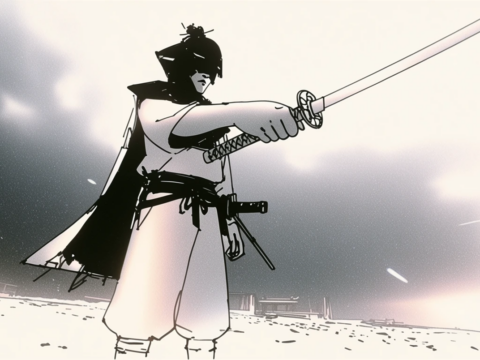
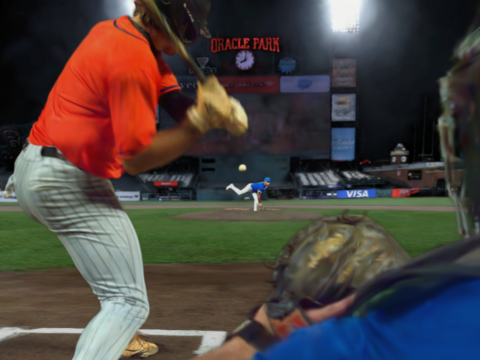
Feed it one photo of a person and a music track. Get back a full minute of that person dancing in perfect time — 720p, 30fps, same face from the first beat to the last. Alibaba’s Tongyi Lab just dropped Wan-Dancer-14B under Apache 2.0, and it quietly solves the one problem every AI video model has been choking on: staying coherent past the 20-second mark.
The Story
On July 13, 2026, the team behind the Wan video models (HumanAIGC / Tongyi Lab at Alibaba) open-sourced Wan-Dancer-14B — a 14-billion-parameter model built for exactly one job: turning music into dance. You hand it three things — a reference image that fixes who the dancer is, a music track, and a short text prompt for the style — and it choreographs a rhythm-locked performance that holds together for over a minute.
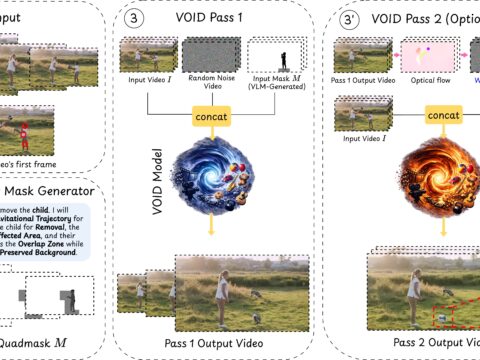
That “over a minute” is the headline. Diffusion-based video models are notorious for drifting: faces morph, limbs melt, the whole clip loses the plot somewhere around 15–20 seconds. Wan-Dancer sidesteps that with a hierarchical two-stage framework. A global stage reads the entire music track up front and plans the choreography as sparse keyframes, so the dance has real musical structure — build-ups, drops, phrasing — instead of second-to-second guesswork. A local stage then conditions on that global plan to render the final 720p/30fps clip with tight beat-sync and locked identity.
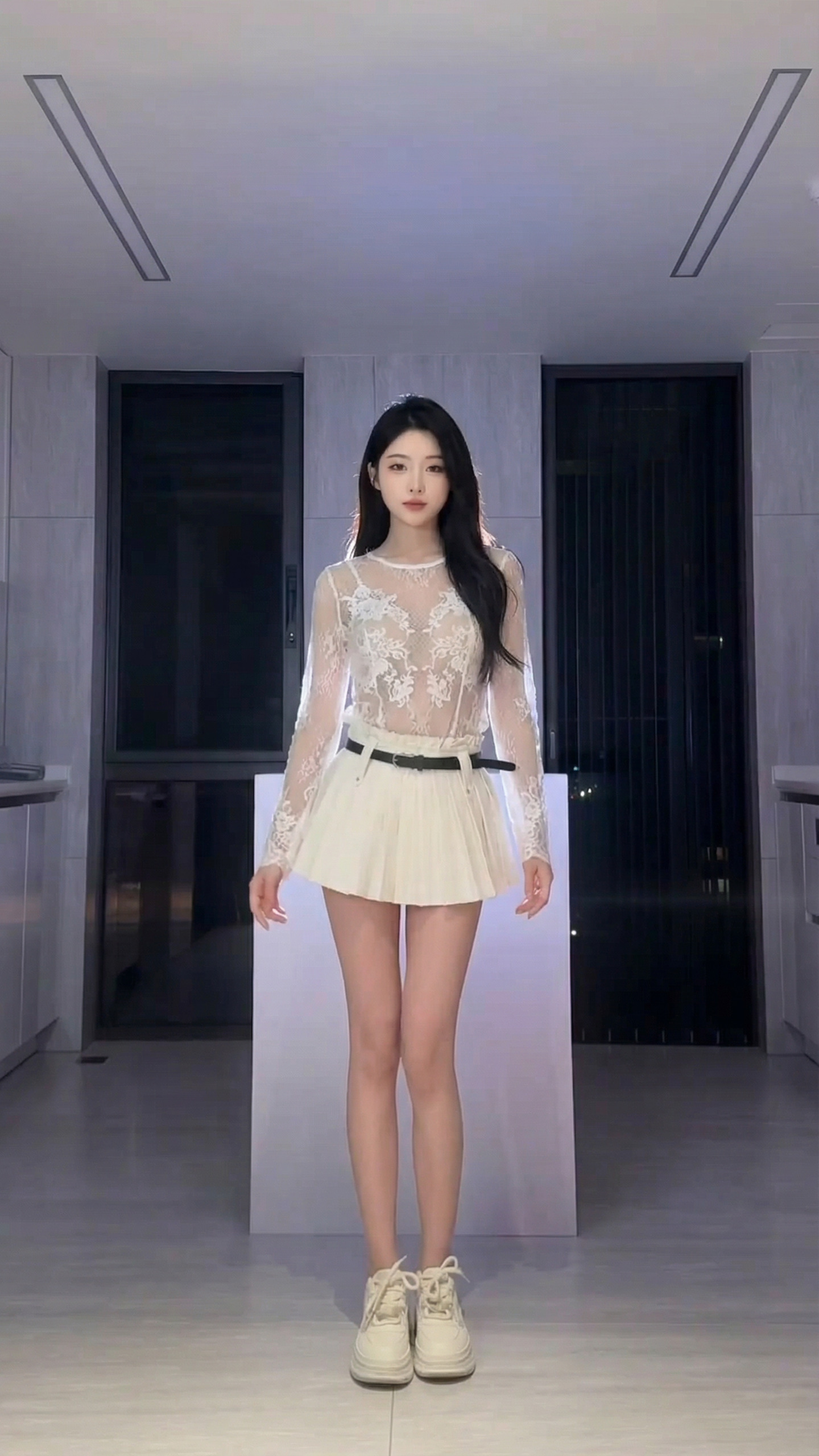
Under the hood there are a few genuinely clever bits: time-mapped RoPE embeddings that let the model adapt to different frame rates, an optical-flow-based loss that penalizes jittery, discontinuous motion, and a motion-speed control that keeps detail intact even during fast footwork. One checkpoint covers five very different vocabularies — Chinese classical, K-pop, street, Latin, and tap — which is the part that surprised me most. Most dance models overfit hard to one genre; this one swings from flowing sleeve-work to sharp K-pop point choreography without a retrain.
Why You Should Care
If you make characters — VTubers, virtual idols, game avatars, music-video concepts, dance covers — this collapses a pipeline that used to mean mocap suits, cleanup, and retargeting into “picture + song.” But the reason it belongs in the Lab isn’t the one-click demo. It’s the editability.
Because the global stage exposes keyframes, you can direct the result instead of rerolling the dice. Wan-Dancer ships two forms of creative control on top of the base generation. Motion editing lets you reach into the keyframe timeline and reshape specific poses — pin a heart gesture here, an arms-up freeze there — and the local stage interpolates clean motion through your edits.
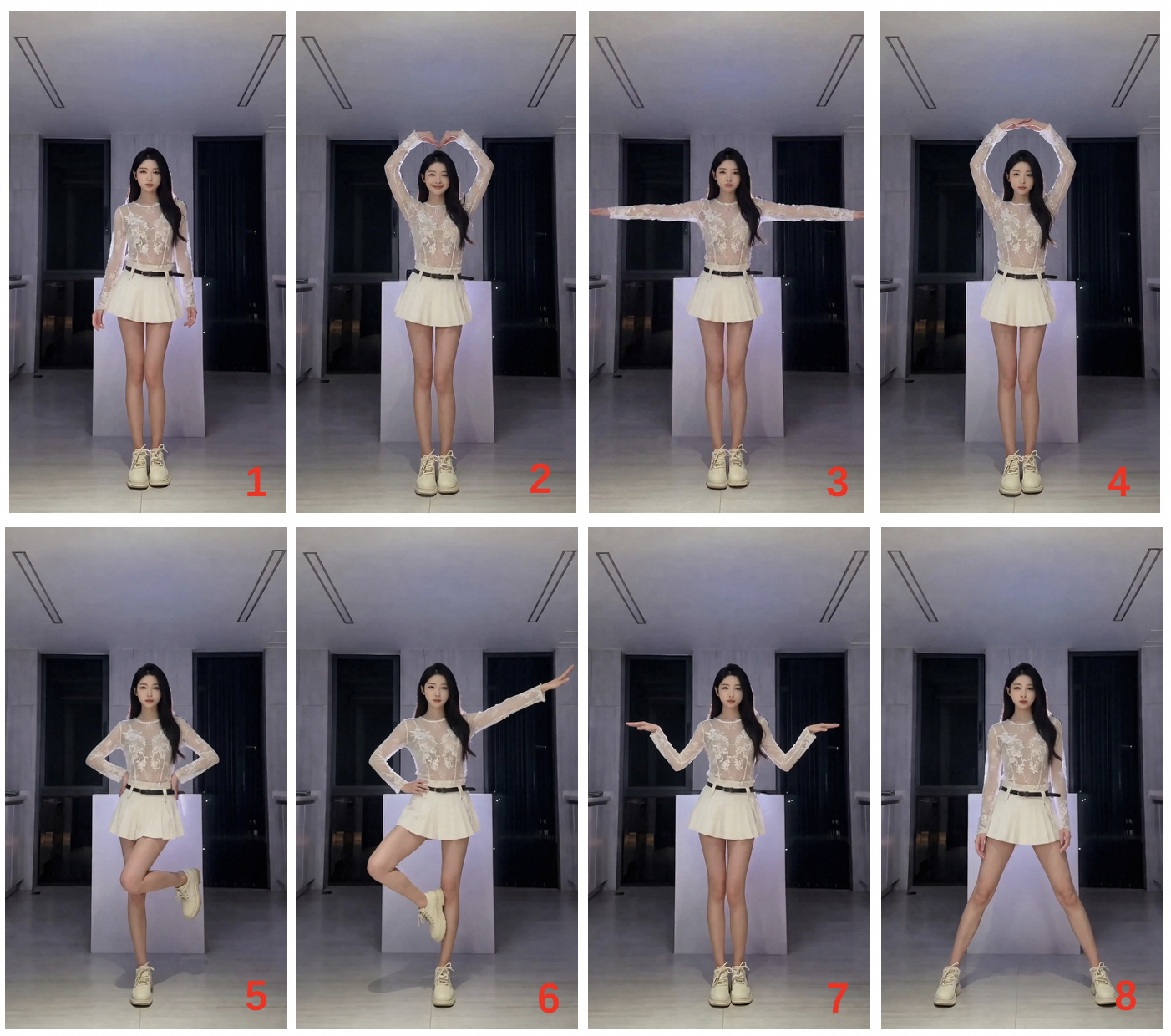
Outfit editing is the other half: swap the dancer’s costume across the whole take while the identity, lighting, and choreography stay put. Same performer, same routine, a wardrobe of looks — leather jacket, cargo pants, summer dress — all holding the same face and background.
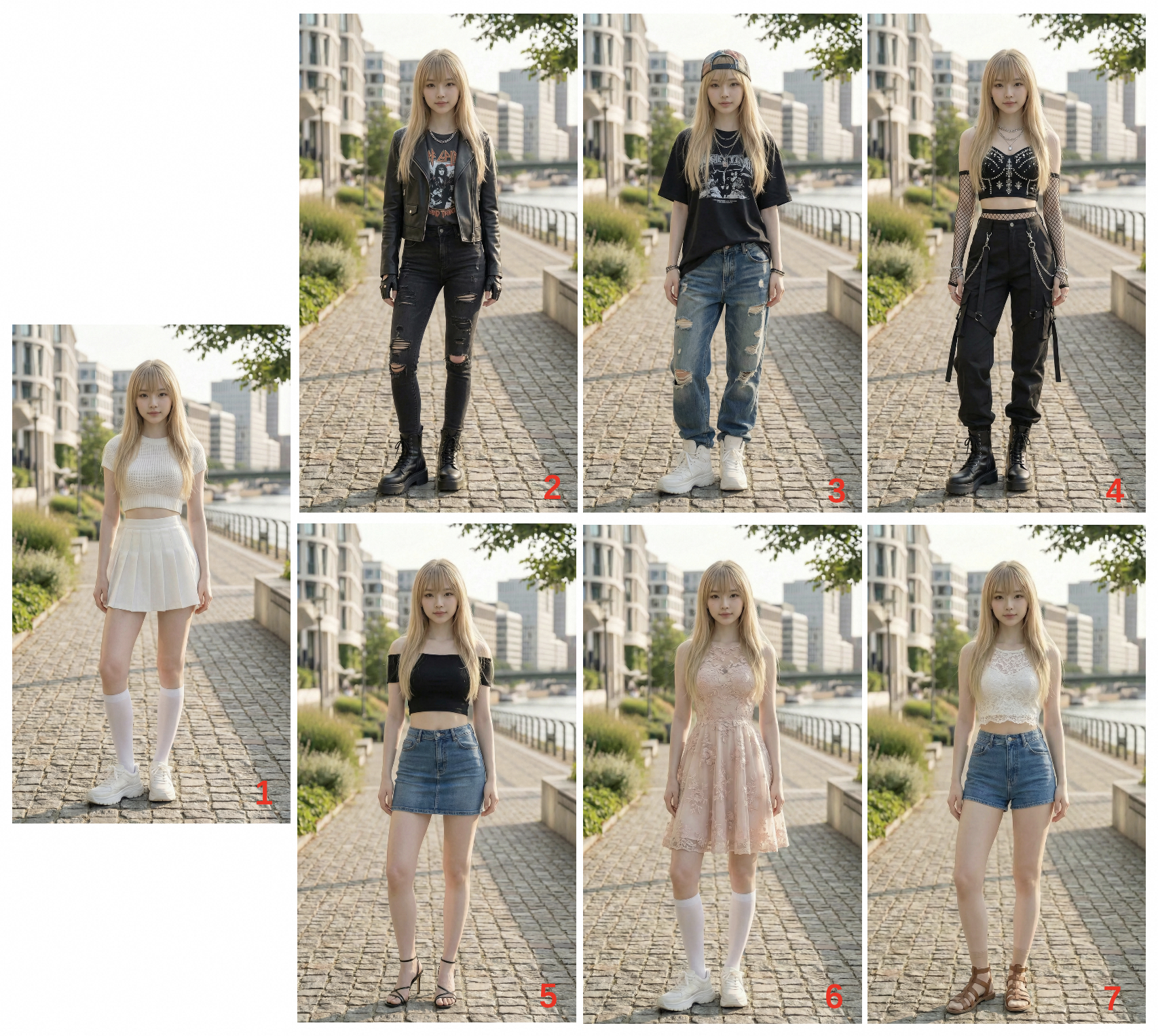
Add LoRA support for training your own choreographic styles, and this stops being a toy and starts looking like a directable character-animation tool. That’s the difference between “AI made a dance” and “I directed a dance.”
Try It / Follow Them
Everything is out in the open. Weights and inference code are on Hugging Face (Wan-AI/Wan-Dancer-14B) and ModelScope under Apache 2.0 — yes, commercial use included. There’s native ComfyUI support, with an official walkthrough in the ComfyUI docs, so you don’t need to touch the raw scripts to get going.
Be honest with yourself about the hardware, though. This is a big model: two ~34.5 GB checkpoints (a global and a local model), a VAE, and a T5 text encoder. The team tested inference on 8× NVIDIA A800 (80 GB) — so out of the box this is server-grade. Expect quantized and block-swap community builds to bring it down to prosumer GPUs over the coming weeks, the same arc every Wan release has followed. The full method is written up in the paper (arXiv:2607.09581), and the demo reel lives on the project page.
IK3D Lab Take
We’ve watched AI video crawl from 4-second clips to 30-second unbroken shots this year. Wan-Dancer’s contribution isn’t just length — it’s the idea that you get coherence by planning the whole thing first from the full soundtrack, then filling in the frames. That “structure before pixels” instinct keeps showing up in the best releases we cover, and it’s the right one.
The VRAM bill means most of us won’t run the full 14B locally on day one, and the demos lean heavily on a specific idol aesthetic — but keyframe-level motion and outfit control, in an open Apache-2.0 model, is the part that matters. That’s a directable character performer you can actually build on. If you animate characters for a living, this is the open release to keep on your radar this month. We’ll be feeding it something a lot weirder than K-pop and reporting back.