Hook
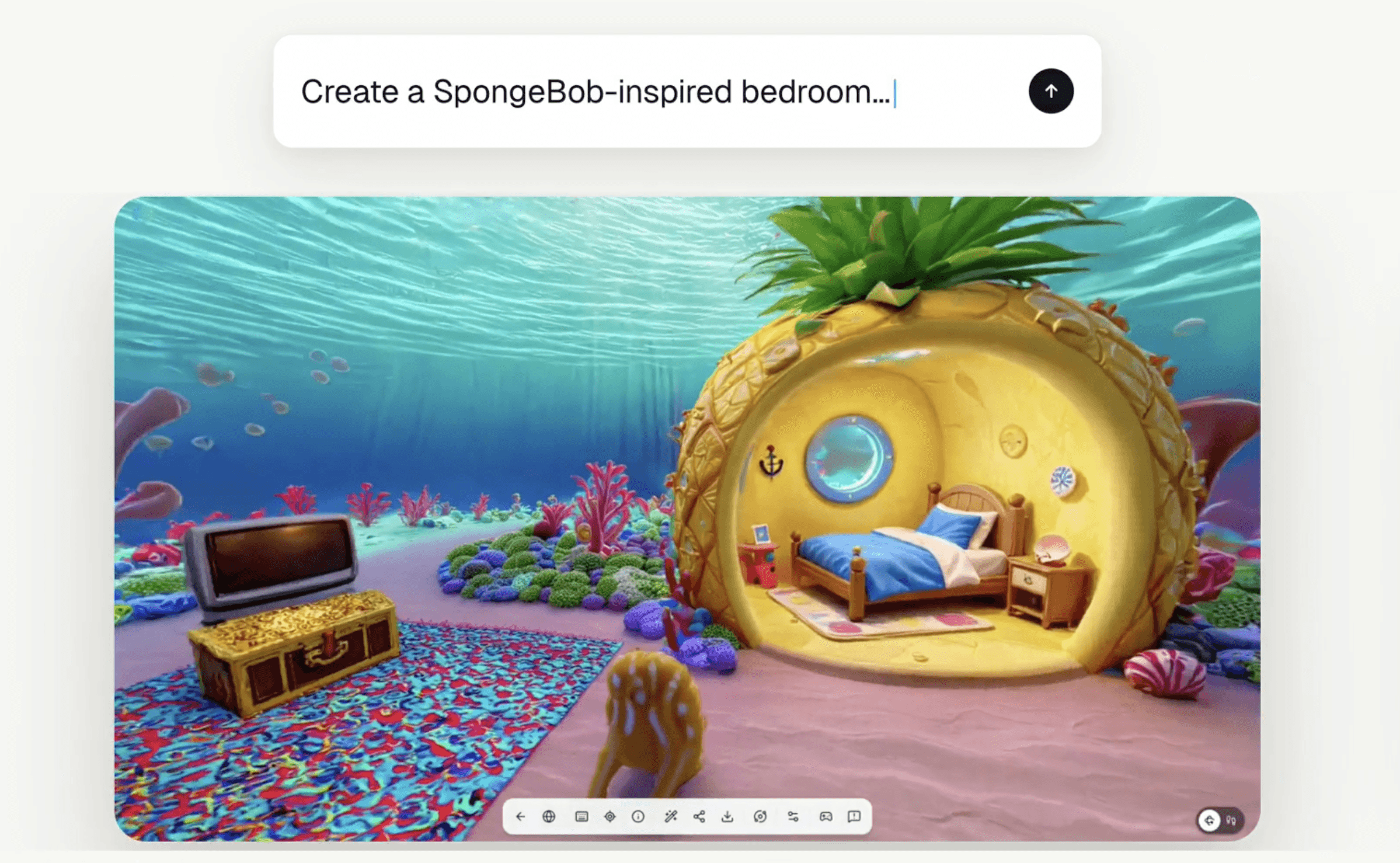
For two years, generating a 3D world meant opening a web app, uploading an image, and babysitting a progress bar. SpAItial just deleted that whole ritual. As of June 23, the German lab’s Echo world model ships as a Claude plugin and a hosted MCP server — which means your AI agent can now call world generation as a tool, the same way it calls a calculator. Tell Claude “build me a moody Moroccan riad,” and a fully navigable Gaussian splat comes back.
The Story
We covered SpAItial back in May, when Echo-2 quietly out-splatted Marble, HunyuanWorld and Lyra with a single drop. Echo is the part that does the heavy lifting: feed it one image, a text prompt, or a 360° panorama, and it returns a metric-scale 3D scene rendered as Gaussian splats — not a flat skybox, an actual space you can walk into. Echo-2 added segmentation, object-level editing, and virtual staging on top.
What landed this week isn’t a new model. It’s a new doorway. SpAItial wrapped Echo in two things at once: a Claude plugin bundling four skills, and a stateless hosted MCP server living at mcp.spaitial.ai/mcp that maps cleanly onto their Developer API. The four skills cover the entire lifecycle — create-world (from text, image, or panorama), edit-world (SpAItial’s iterative panorama-editing loop), manage-worlds (list past jobs, check status, toggle visibility, cancel runs), and export-mesh (bake a finished world down to a downloadable .ply).
Because MCP is an open protocol, this doesn’t stop at Claude. The server works across Claude Code, Claude Desktop, Cursor, VS Code and sandboxed agent environments — anything that speaks MCP. Generation runs as an async job: you fire off a request, then poll get_world_status instead of blocking, with a finished world landing in roughly five to ten minutes on Echo 2 – Standard. Outputs come back as hosted URLs you can orbit, pan and zoom, plus short-lived signed links for the raw .ply, SPZ or SOG files.
Why You Should Care
This is the quiet shift the Lab has been tracking all spring: 3D generation is stopping being a destination and becoming a primitive. When world generation is an MCP tool, an agent can chain it — generate a scene, segment an object, restage it, export a mesh, drop that mesh into a downstream pipeline — without a human ever touching the SpAItial UI. That’s the difference between a website you visit and a capability your software has.
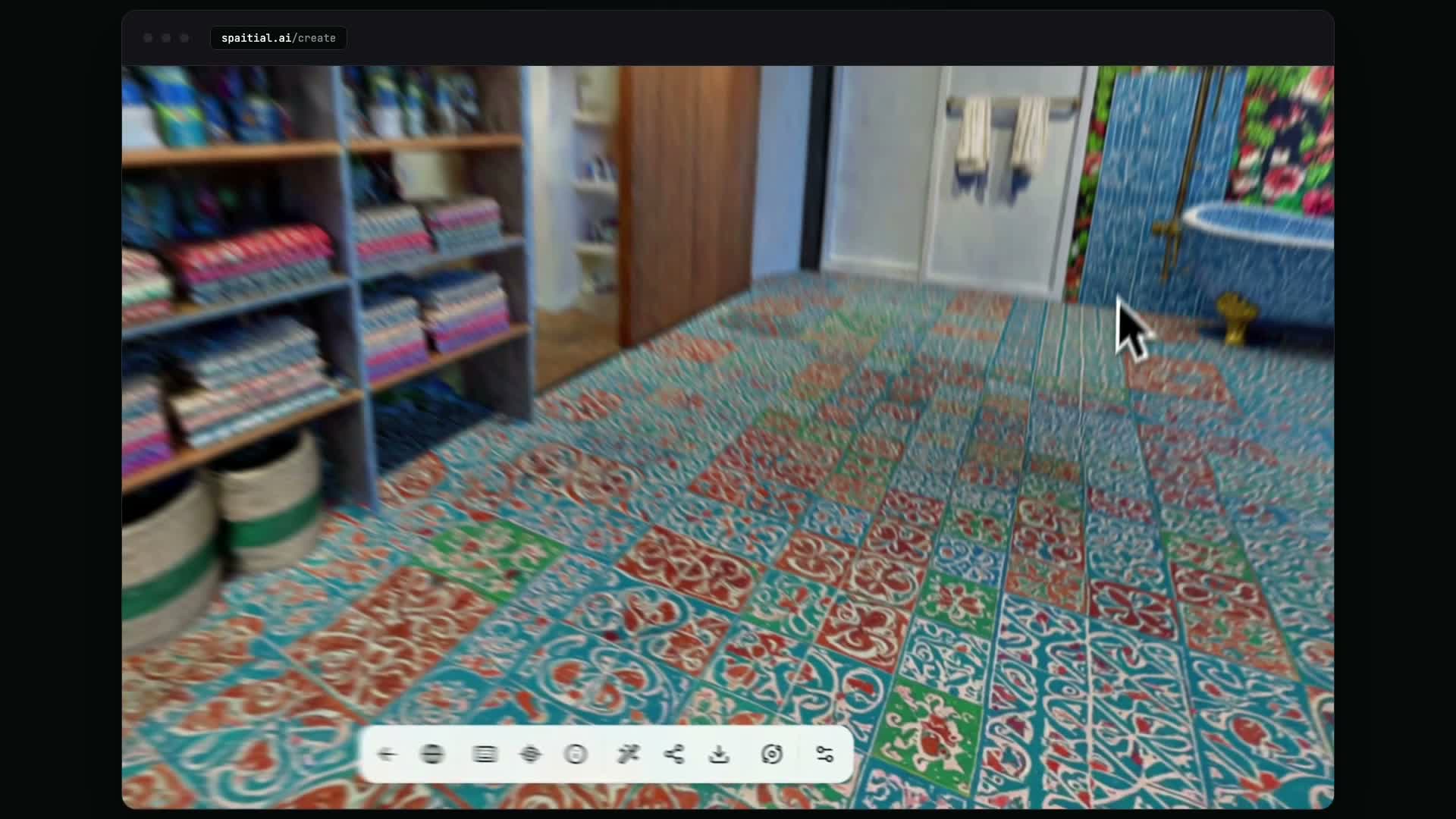
For makers, the practical wins stack up fast. Game devs can script “generate 20 dressed interiors” overnight from a list of prompts. Archviz artists can panorama-edit a client’s space in a loop and ship a .ply straight into Blender or Unreal. And because it’s the agent driving the API, you can wire Echo into a larger workflow — mood-board to world to game-ready mesh — where each step is a tool call, not a tab. It slots neatly next to the other agentic moves we’ve covered, from Claude moving into Blender and Fusion to MiniMax Hub.
Try It / Follow Them
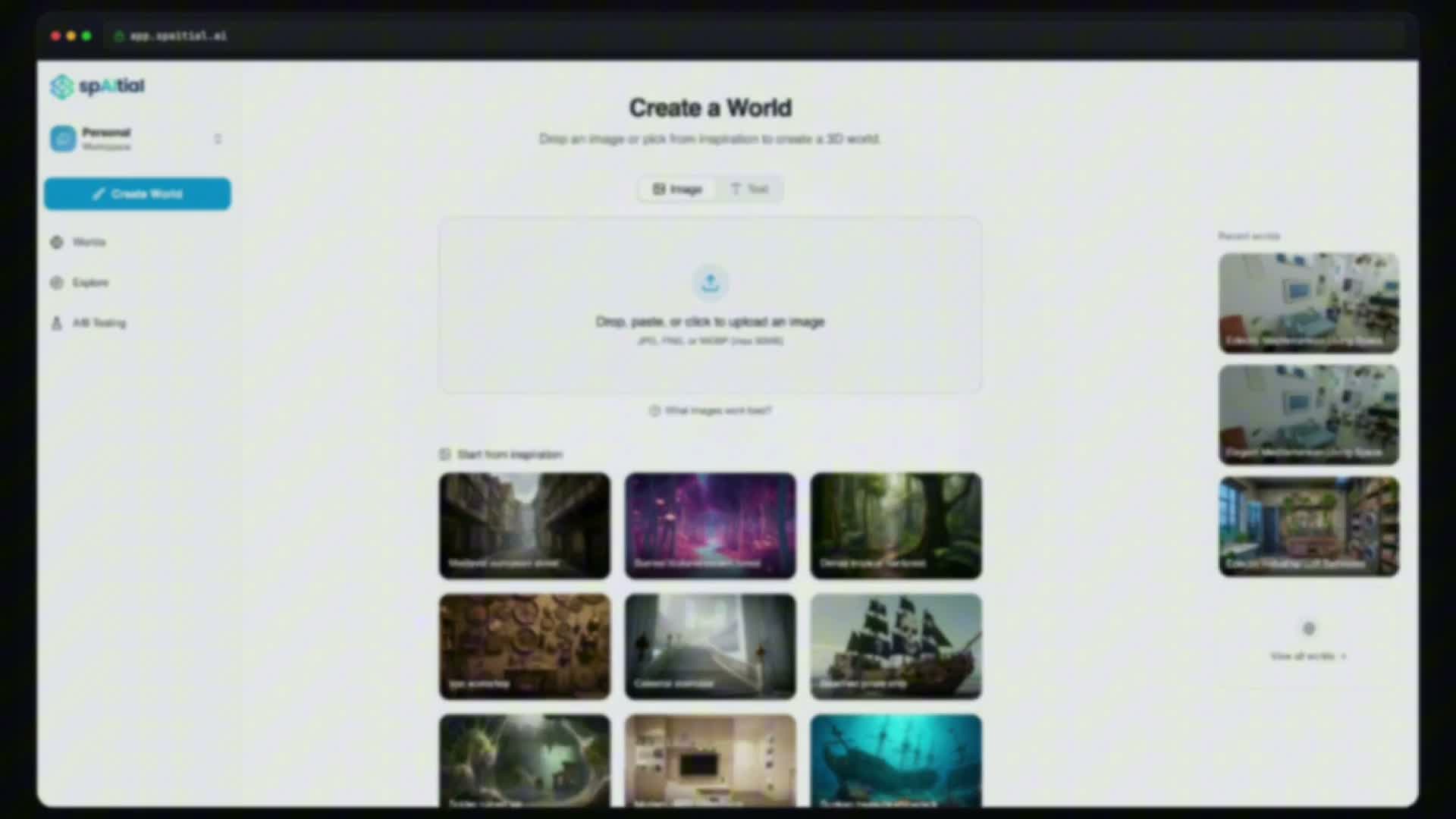
- Add the MCP server: point your agent (Claude Desktop, Claude Code, Cursor, VS Code) at
mcp.spaitial.ai/mcpand you’ll get the four skills as callable tools. - Prefer the GUI? The web app at spaitial.ai runs the exact same Echo-2 engine — drop an image or start from an inspiration scene.
- Building something bigger? The same endpoints are exposed through SpAItial’s Developer REST API for non-MCP pipelines.
- Watch the work: SpAItial — founded in 2025 on a “spatial foundation models” thesis with $13M in seed funding — is one of the most-watched names in the radiance-field world. Their Echo releases are worth following closely.
IK3D Lab Take
The model isn’t the headline here — the plumbing is. SpAItial just turned “generate a 3D world” into a single tool call any agent can make, and that’s a bigger deal than another quality bump. The honest caveats: five-to-ten-minute jobs aren’t real-time, signed links expire, and Gaussian-splat-to-clean-mesh is still a lossy step (that .ply export will need cleanup before it’s production geometry). But the direction is unmistakable. We’ve spent 2026 watching splats become infrastructure; this is the moment world generation joins them — not as an app you open, but as a verb your tools already know. Wire it into your agent, hand it a sentence, and go make something.