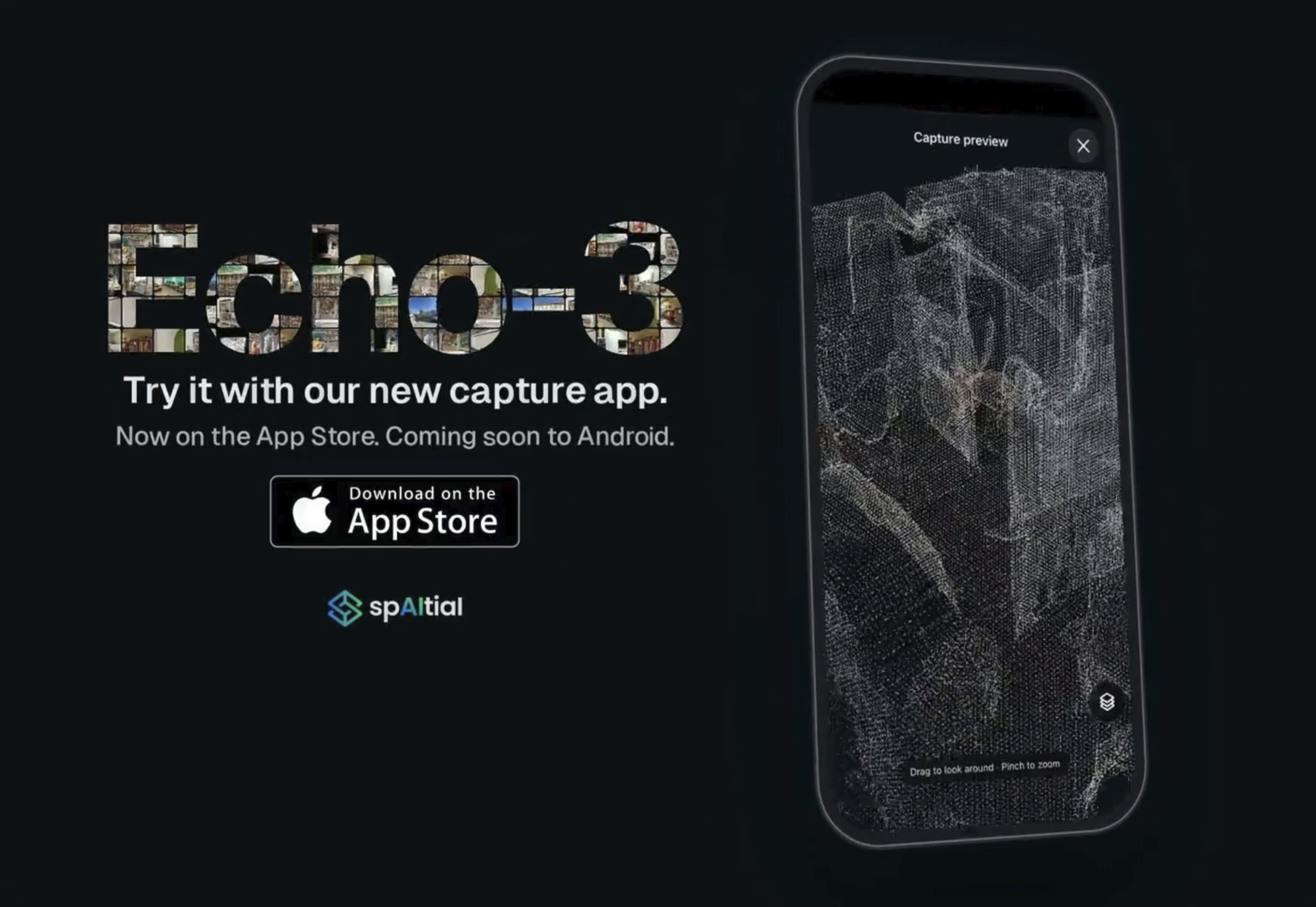
A lab building frontier “world models” just did something very down-to-earth: it put its tech in an iPhone app. On October 27, 2026, SpAItial released Echo-3. You walk through a room for a few minutes, and it hands you back a clean, measurable 3D copy of that space.
No tripod. No rig. No hour-long scan. Just your phone and a short walk.
The Story
SpAItial is the lab chasing “physically grounded world models” — AI that can generate real and imagined spaces and reason about how they look and behave. Its first model, Echo, arrived in December 2025 and built a 3D world from a single photo or text prompt. Echo-2 (April 2026) added the ability to split a scene into objects and edit them. Both started from one image.
Echo-3 flips the input. Instead of dreaming a room from one picture, it starts from a real walkthrough and rebuilds the actual place. SpAItial frames it as reconstruction and generation in one model: “build the scene from what you capture, then fill in the missing regions so they match the surroundings.” Their words for the goal: “preserve what you captured and complete what you missed.”
That second half is the AI part. A quick phone capture always has holes — a surface you only glanced at, a corner you never pointed the camera at. Classic photogrammetry leaves those as smears or floating junk. Echo-3 instead generates plausible geometry and texture to close the gaps, while keeping the real captured parts faithful. The output is metric: SpAItial says dimensions and distances match the real space, so you can measure inside the result.
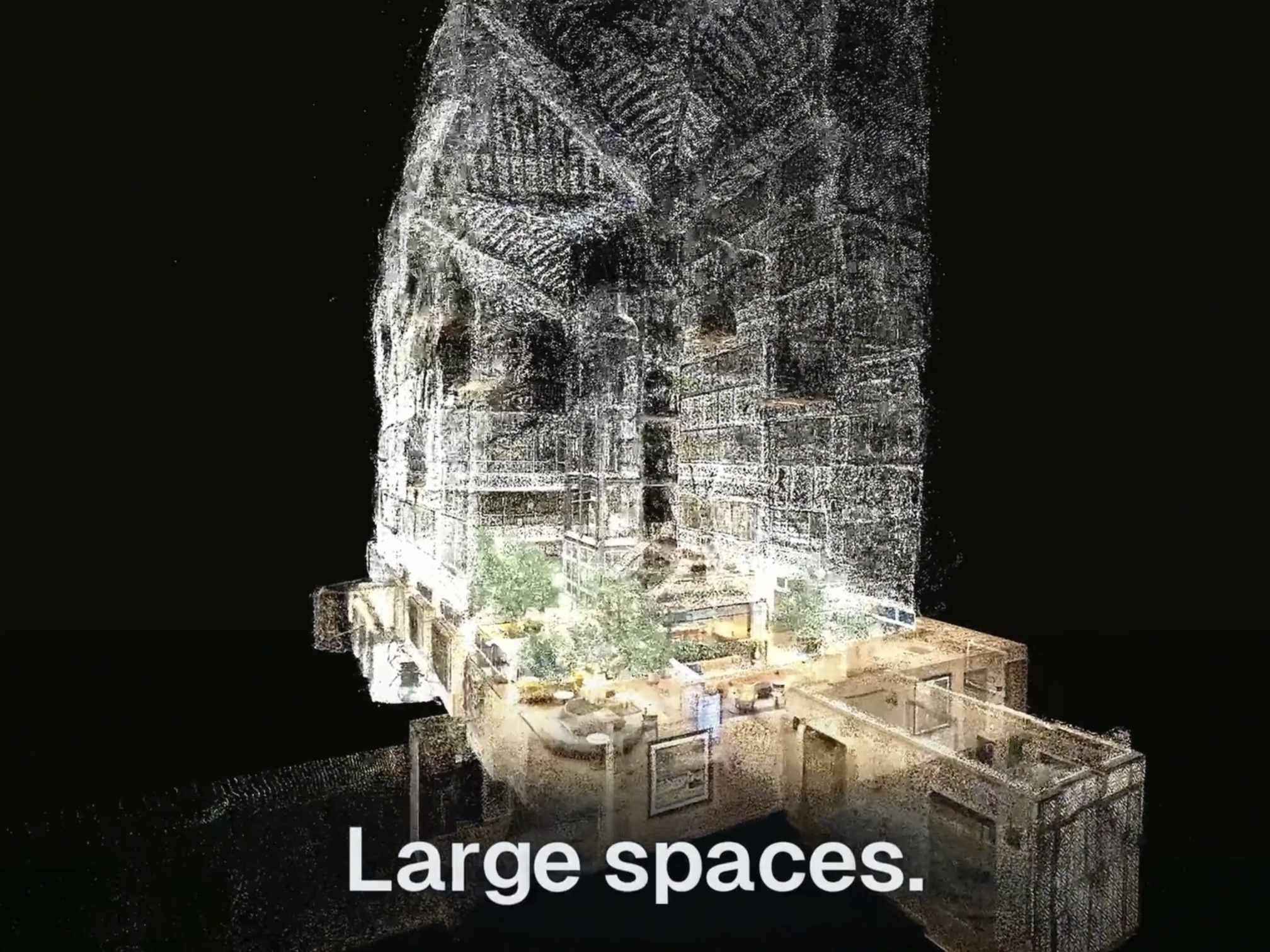
SpAItial published a four-way comparison — the same scene captured along a similar path in Polycam, KIRI Engine, Niantic Scaniverse and its own app. In their footage, Echo-3 “produces sharp surfaces with no visible floaters.” Worth noting: this is a vendor demo, not an independent benchmark, and SpAItial has published no numbers yet. Trust your own eyes once you capture a room.
Why You Should Care
For 3D artists and archviz people, capture has always meant a trade: fast-and-messy phone scans, or slow-and-clean rigs. Echo-3’s pitch is that AI inpainting lets a three-minute phone walk land closer to the clean end. That matters for set dressing, background plates, real-estate walkthroughs and reference geometry.
The bigger deal for this Lab is the Developer API. Echo-3 is available to every developer account, and SpAItial names “scene understanding and editing by AI agents” as a target use case. That lines up with their earlier move: a Claude plugin and hosted MCP server, shipped back in June. So this isn’t only a consumer toy — it’s a captured, metric 3D world that an AI agent can call, read and edit programmatically.
Try It / Follow Them
- Get the app: The SpAItial app is on the iOS App Store, with the first month free. Android is “coming soon.” LiDAR-equipped iPhones get live coverage guidance during capture.
- Pricing: Per Radiance Fields’ reporting (not stated on SpAItial’s release post), processing runs 300 credits per recorded scan minute; the Standard plan is 7,500 credits/month (non-commercial) and Pro is 15,000 credits/month with commercial rights. Confirm current terms in-app before you subscribe.
- Build with it: Create an API key in the developer portal and follow the Echo-3 capture guide.
- Read the source: SpAItial’s Echo-3 release post and their capture gallery.
IK3D Lab Take
We have not run Echo-3 ourselves yet, so treat this as a release breakdown, not a hands-on review. What we can judge is the direction — and it’s the right one. Every capture app fights the same enemy: holes in the data. Most either leave ugly floaters or over-smooth everything into mush. Betting a generative model on the gaps, while protecting the real captured pixels, is the smart framing. SpAItial’s own comparison looks genuinely cleaner than the usual photogrammetry mess.
Where we’d push back: that comparison is marketing, and “state of the art” with zero published metrics is a claim, not a fact. The real question is where the inpainting breaks — does Echo-3 invent a plausible-but-wrong wall, a doorway that isn’t there, a floor at the wrong height? For archviz and real-estate that “plausible but wrong” failure mode is dangerous precisely because it looks clean. And the cloud-only, credit-metered, subscription model means your captures leave your device and your wallet pays per minute — a hard sell against free local tools for hobbyists.
Who should try it today: anyone who needs measurable captured spaces fast, and especially anyone wiring 3D capture into an agent pipeline through the API or MCP. That’s the part no free scanner app offers. Who should wait: hobbyists happy with a local splat tool, and anyone who needs ground-truth-accurate geometry where a confidently invented surface would be a real problem. We’ll capture a room and report back.
How this article was made: researched and drafted with AI assistance, then fact-checked against the original sources and reviewed by Issa before publication.


Great breakdown of Echo-3. For a quick creative project, I’d try the AI video editor approach to swap characters in a template using just two photos. AI video editor