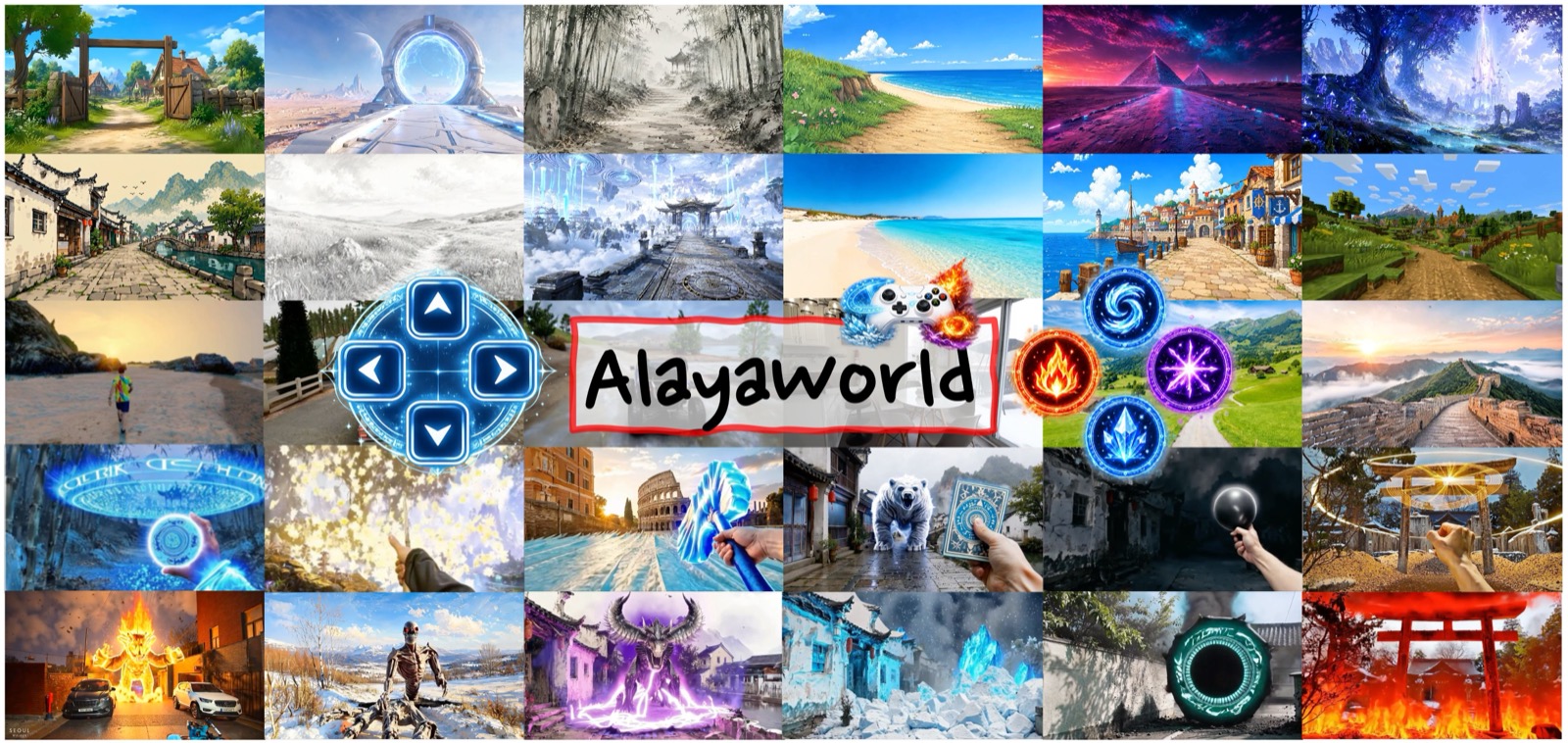
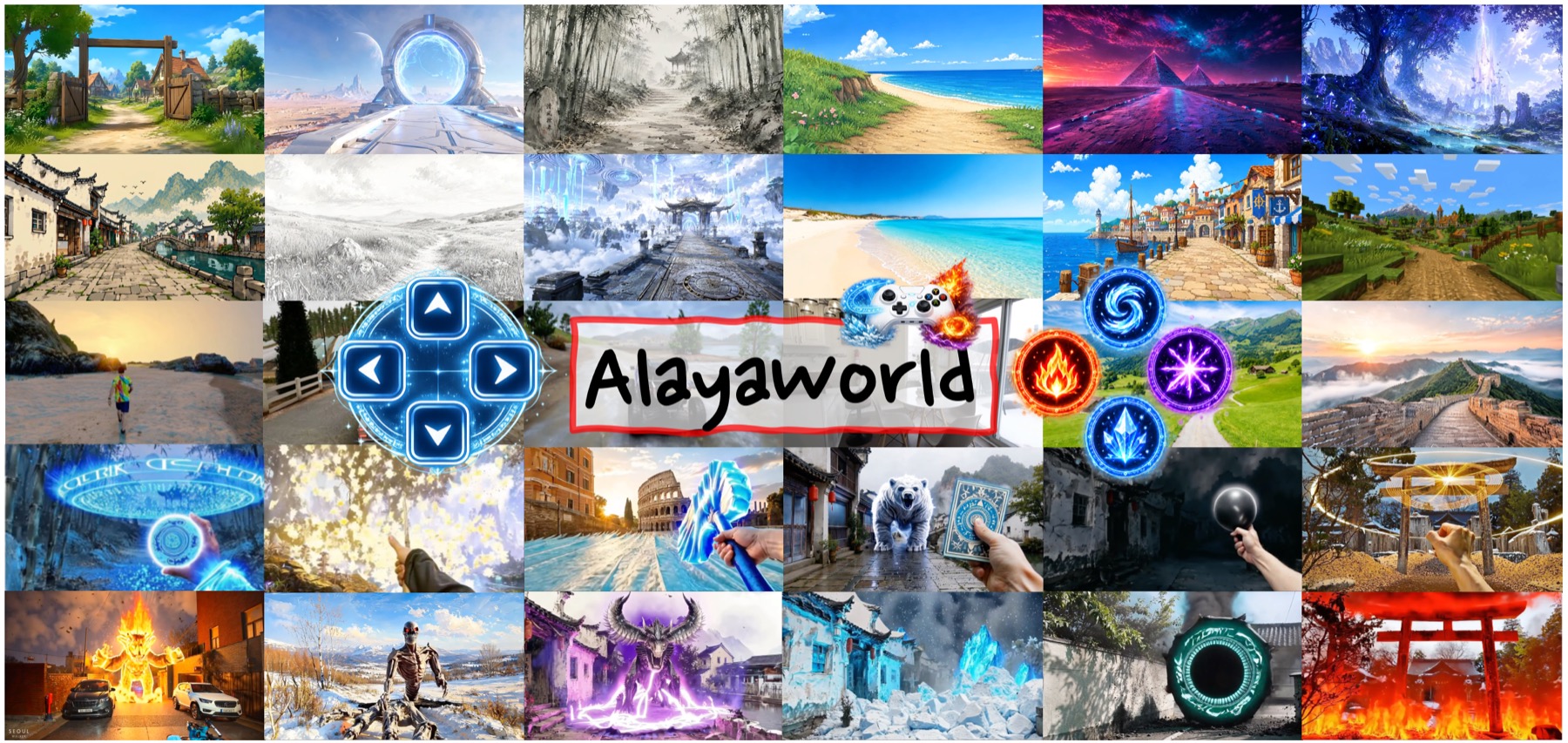
Most “world models” hand you a place and let you look around. AlayaWorld hands you a controller. It’s a 15-billion-parameter video model that dreams up a playable environment one chunk at a time — you steer the camera as it generates, and you can type a new prompt mid-stream to summon a monster, cast a spell, or start a fight without breaking the world. And Shanda’s Alaya Lab just open-sourced the whole thing: weights, inference code, training recipe.
The Story
Alaya Lab (a subsidiary of Shanda AI Research, led by Kaipeng Zhang) dropped AlayaWorld across July 2026: project page and first report on the 8th, weights on Hugging Face on the 16th, and the full technical report on the 21st. The pitch is deceptively simple — an interactive, long-horizon, playable video world that runs autoregressively at 24 fps in 540p and 720p.
Under the hood it’s built on Lightricks’ LTX-2.3 backbone (audio stripped out, leaving a ~13B video diffusion transformer). Instead of rendering a whole clip at once, it generates in short latent chunks — roughly four frames at a time — under two control channels running simultaneously:
- Camera control — per-frame relative pose is Fourier-embedded and fed through an AdaLN module, so you’re literally driving the viewpoint as it paints the next frames.
- Prompt switching — swap the text prompt at any chunk boundary to trigger “combat, spell-casting, and monster summoning.” The world reacts instead of resetting.
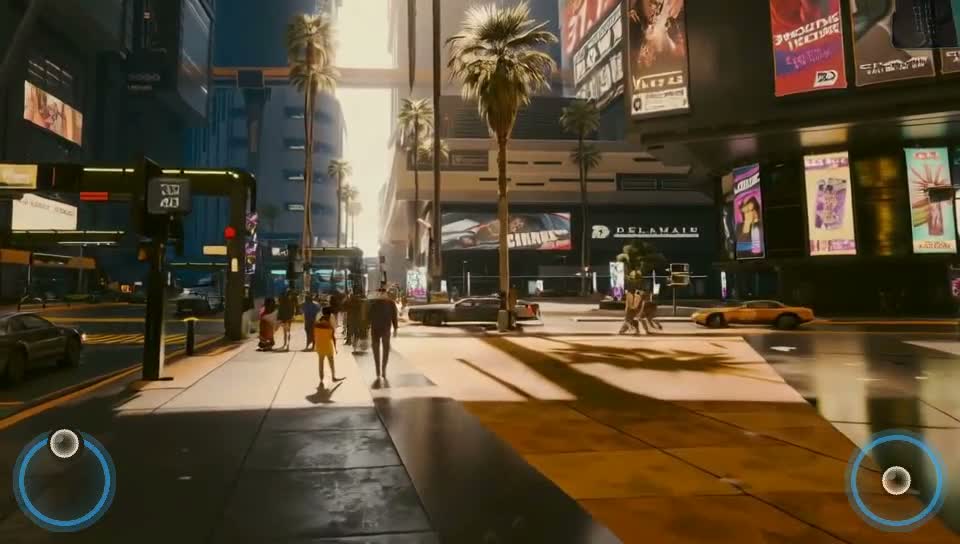
The hard part of any playable world model is memory — walk away from a building and walk back, and lesser models hallucinate a brand-new one. AlayaWorld tackles this with a dual-memory architecture. A temporal memory compresses the last handful of frames into lightweight tokens for frame-to-frame continuity. A separate spatial memory caches past frames with their monocular depth (via Depth-Anything-3) and camera pose, then geometrically re-projects them into the current view. Revisit a spot you’ve already seen, and it renders consistently — real geometry, not a guess.
The other clever trick is how they fight drift. Autoregressive models compound their own errors over time until the image melts. AlayaWorld trains against this with an “error bank”: it stores the model’s own reconstruction residuals during training and replays them back into the context, so the model learns to recover from exactly the failure modes it produces at inference. Pair that with a distillation pass that cuts sampling from ~30 steps per chunk down to four, and you get something that stays coherent past the 60-second mark at close-to-constant compute cost.
Why You Should Care
We’ve covered a wave of world models in the Lab — Marble, Holo-World, ABot-World, Project Genie. Most of them are about reconstruction: turn an image into an explorable place. AlayaWorld sits in a different lane. It’s a real-time, promptable game engine made of pure diffusion — closer to Genie and Matrix-Game than to a splat capture. On their iWorld-Bench numbers it posts the best trajectory accuracy (0.7985) and memory symmetry (0.8871) against Cosmos, HunyuanVideo-1.5, Yume 1.5 and Matrix-Game 2.0.
For creative technologists that’s a big deal: a mid-generation prompt swap is a directing tool. Imagine previz where you walk a virtual camera through a set and call the action as it happens — “now it’s night, now the dragon lands.” And because the entire stack is open — the 222k-clip data pipeline, the three-stage training recipe, the distillation — it’s a genuine research foundation, not a locked demo.
Try It / Follow Them
- Code & weights: github.com/AlayaLab/AlayaWorld and huggingface.co/AlayaLab/AlayaWorld. You’ll need a CUDA GPU and PyTorch ≥ 2.6; run
bash inference/run.sh(scale withGPUS=4). - Watch it move: the project page and demo video are the fastest way to feel the interactivity.
- Read the deep dive: the full technical report is on arXiv (2607.18367).
- License caveat: it inherits the LTX-2 Community License — academic / non-commercial use; commercial licensing runs through Lightricks.
IK3D Lab Take
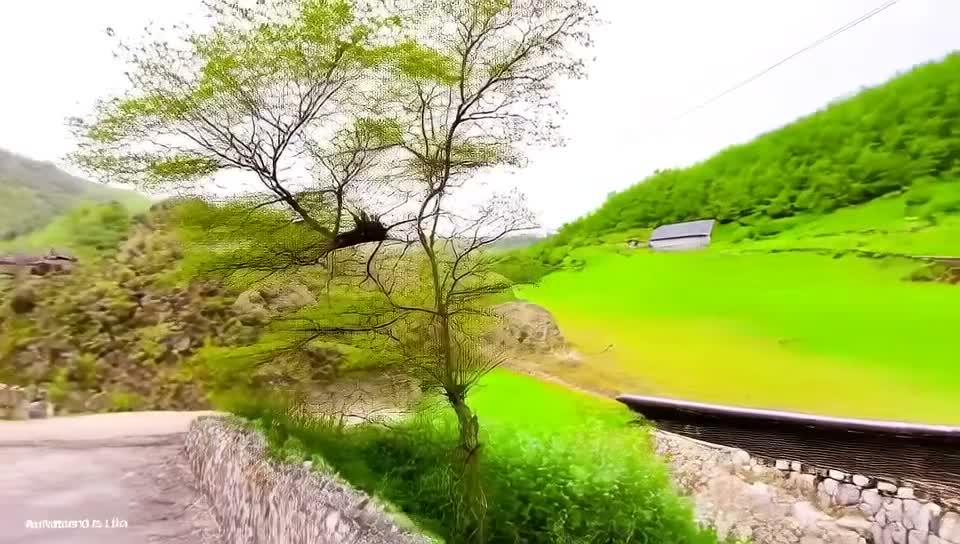
The moment that sells AlayaWorld isn’t the pretty landscapes — it’s typing “summon a monster” and watching one arrive without the world falling apart. The dual-memory-plus-error-bank combo is the least glamorous and most important idea here: it’s the difference between a tech demo that looks great for eight seconds and a system you could actually play. It’s not real-time on a laptop yet, and the non-commercial license will frustrate the studios who’d love it most. But as a fully open blueprint for a promptable, memory-consistent world engine, this is one of the most exciting drops of the summer — and exactly the kind of thing we’ll be watching fork over the next few months.
The Story
Alaya Lab (a subsidiary of Shanda AI Research, led by Kaipeng Zhang) dropped AlayaWorld across July 2026: project page and first report on the 8th, weights on Hugging Face on the 16th, and the full technical report on the 21st. The pitch is deceptively simple — an interactive, long-horizon, playable video world that runs autoregressively at 24 fps in 540p and 720p.
Under the hood it’s built on Lightricks’ LTX-2.3 backbone (audio stripped out, leaving a ~13B video diffusion transformer). Instead of rendering a whole clip at once, it generates in short latent chunks — roughly four frames at a time — under two control channels running simultaneously:
- Camera control — per-frame relative pose is Fourier-embedded and fed through an AdaLN module, so you’re literally driving the viewpoint as it paints the next frames.
- Prompt switching — swap the text prompt at any chunk boundary to trigger “combat, spell-casting, and monster summoning.” The world reacts instead of resetting.
The hard part of any playable world model is memory — walk away from a building and walk back, and lesser models hallucinate a brand-new one. AlayaWorld tackles this with a dual-memory architecture. A temporal memory compresses the last handful of frames into lightweight tokens for frame-to-frame continuity. A separate spatial memory caches past frames with their monocular depth (via Depth-Anything-3) and camera pose, then geometrically re-projects them into the current view. Revisit a spot you’ve already seen, and it renders consistently — real geometry, not a guess.
The other clever trick is how they fight drift. Autoregressive models compound their own errors over time until the image melts. AlayaWorld trains against this with an “error bank”: it stores the model’s own reconstruction residuals during training and replays them back into the context, so the model learns to recover from exactly the failure modes it produces at inference. Pair that with a distillation pass that cuts sampling from ~30 steps per chunk down to four, and you get something that stays coherent past the 60-second mark at close-to-constant compute cost.
Why You Should Care
We’ve covered a wave of world models in the Lab — Marble, Holo-World, ABot-World, Project Genie. Most of them are about reconstruction: turn an image into an explorable place. AlayaWorld sits in a different lane. It’s a real-time, promptable game engine made of pure diffusion — closer to Genie and Matrix-Game than to a splat capture. On their iWorld-Bench numbers it posts the best trajectory accuracy (0.7985) and memory symmetry (0.8871) against Cosmos, HunyuanVideo-1.5, Yume 1.5 and Matrix-Game 2.0.
For creative technologists that’s a big deal: a mid-generation prompt swap is a directing tool. Imagine previz where you walk a virtual camera through a set and call the action as it happens — “now it’s night, now the dragon lands.” And because the entire stack is open — the 222k-clip data pipeline, the three-stage training recipe, the distillation — it’s a genuine research foundation, not a locked demo.
Try It / Follow Them
- Code & weights: github.com/AlayaLab/AlayaWorld and huggingface.co/AlayaLab/AlayaWorld. You’ll need a CUDA GPU and PyTorch ≥ 2.6; run
bash inference/run.sh(scale withGPUS=4). - Watch it move: the project page and demo video are the fastest way to feel the interactivity.
- Read the deep dive: the full technical report is on arXiv (2607.18367).
- License caveat: it inherits the LTX-2 Community License — academic / non-commercial use; commercial licensing runs through Lightricks.
IK3D Lab Take
The moment that sells AlayaWorld isn’t the pretty landscapes — it’s typing “summon a monster” and watching one arrive without the world falling apart. The dual-memory-plus-error-bank combo is the least glamorous and most important idea here: it’s the difference between a tech demo that looks great for eight seconds and a system you could actually play. It’s not real-time on a laptop yet, and the non-commercial license will frustrate the studios who’d love it most. But as a fully open blueprint for a promptable, memory-consistent world engine, this is one of the most exciting drops of the summer — and exactly the kind of thing we’ll be watching fork over the next few months.